
Walk into any hardware store in the USA and you’ll see two walls of work gloves. One is leather: rigger gloves, drivers, welding gauntlets. The other is synthetic: stretchy mechanic gloves, coated knits, Amara palms. Both sell. Both have loyal users. And for a distributor or a brand planning a range, the question isn’t which one is “better”, it’s which one fits which job and which customer.
We make both leather work gloves and synthetic mechanic style gloves in Sialkot, Pakistan, for buyers in the USA and Europe. This guide compares leather vs synthetic work gloves on the things that actually decide a sale: protection, feel, durability, heat, water, comfort and cost.
The short answer
- Leather work gloves win on heat, sparks, abrasion from rough material and long life under heavy use.
- Synthetic work gloves win on dexterity, fit, breathability and easy washing, and they’re often lighter.
- Near heat or welding, choose leather. Synthetic fabrics can melt.
- For mechanics, assembly and light handling, synthetic gloves are usually the better buy.
- Many good ranges mix both, with a leather palm on a synthetic or fabric back.
What We Mean by Leather and Synthetic Gloves
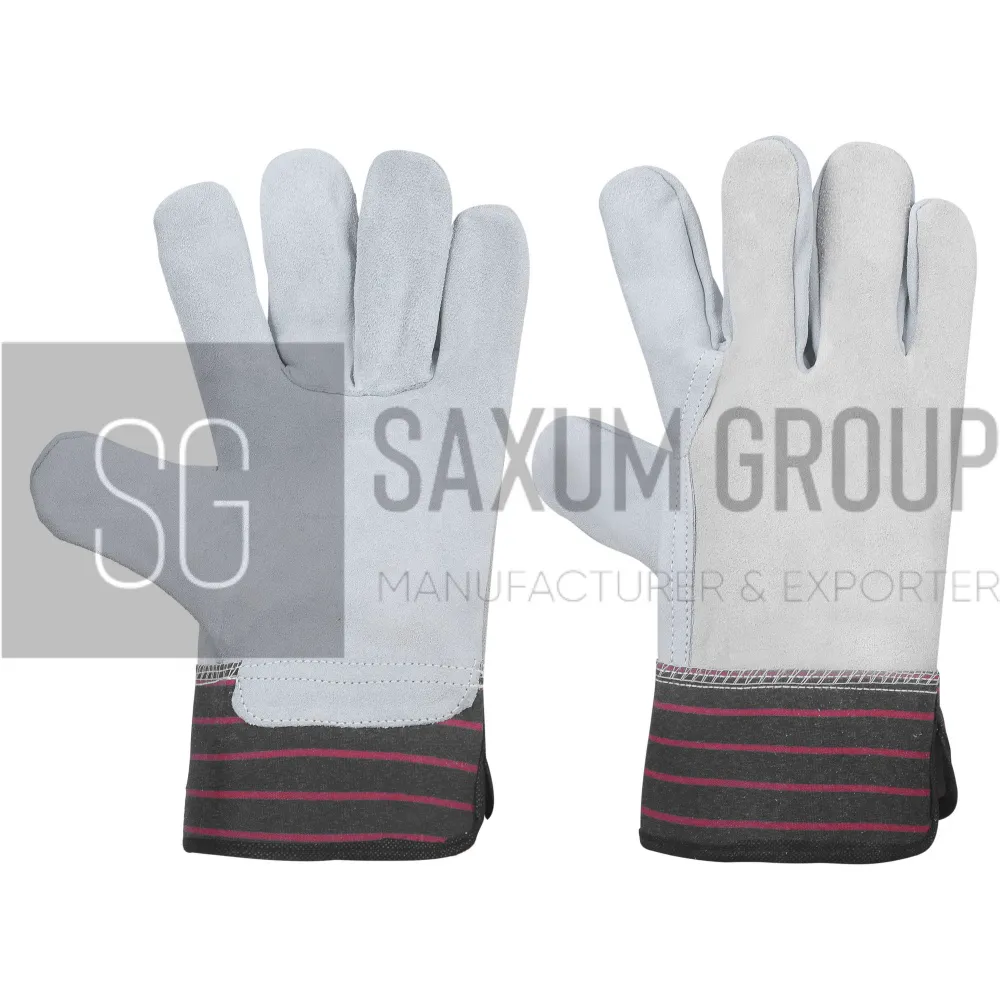
Leather work gloves are made from animal hide, mainly cowhide and goatskin, sometimes pigskin or deerskin. They come as split leather (the rougher inner layer of the hide) or grain leather (the smooth outer layer). Our split vs grain leather gloves guide explains the difference, and cowhide vs goatskin work gloves compares the two main hides.
Synthetic work gloves use man-made materials. The common ones are:
- Synthetic leather (Amara and similar microfibers). A soft, thin material that looks and feels a bit like leather, used on the palms of mechanic gloves.
- Stretch fabrics such as spandex blends, used on the back of the hand for a close, flexible fit.
- Coated knits: nylon or polyester knit gloves dipped in nitrile, latex or polyurethane on the palm.
- High-performance fibers such as aramid (Kevlar) or HPPE, used for cut resistance.
A lot of real-world gloves are hybrids: a leather palm with a cotton, canvas or synthetic back. The classic leather palm rigger glove is exactly that.
Leather vs Synthetic Work Gloves: Side by Side
| Factor | Leather | Synthetic |
|---|---|---|
| Heat and sparks | Very good, chars instead of melting | Poor to fair, many fabrics melt |
| Abrasion from rough material | Very good, especially thick split leather | Fair to good, depends on coating |
| Dexterity and feel | Fair to good, best in thin grain leather | Very good |
| Fit | Molds to the hand over time | Close fit from day one |
| Breathability | Fair | Good to very good |
| Water and oil | Absorbs water, stiffens when dried badly | Coated gloves resist water and oil well |
| Washing | Needs care | Most can be machine washed |
| Typical life under heavy use | Long | Shorter, but cheaper to replace |
Where Leather Work Gloves Are the Better Choice
Heat, sparks and welding
This is the clearest win for leather. Leather doesn’t melt. When it gets too hot, it chars and stiffens, which gives the wearer a moment to react. Many synthetic fabrics soften or melt onto the skin long before leather would fail. That’s why every serious welding glove is leather, and why our guide to heat resistant leather gloves starts with leather as the base.
Rough, heavy material
Bricks, timber, scrap metal, rebar and stone chew through thin gloves. Thick split cowhide holds up far longer against that kind of abrasion. For the hardest handling jobs, a second layer of leather on the palm adds more life, which is the idea behind double palm work gloves.
Long service life
A good leather glove, looked after properly, can outlast several pairs of light synthetic gloves. For buyers who think in cost per day of use rather than cost per pair, leather often comes out ahead. Our guide on how to clean leather work gloves shows how to make them last.
Comfort that improves with wear
Leather breaks in. After a few days it softens and takes the shape of the hand. Many workers prefer that broken-in feel to anything a new glove offers.
Where Synthetic Work Gloves Are the Better Choice
Dexterity and fine work
Synthetic mechanic gloves are thin and stretchy, so they fit like a second skin. Picking up small screws, using hand tools, or working on engines is far easier in a close-fitting synthetic glove than in thick leather.
Breathability and comfort in warm weather
Stretch fabric backs let heat and sweat escape, which makes synthetic gloves more comfortable for long shifts in warm conditions, as long as there’s no heat source nearby.
Oil, water and washing
Nitrile coated gloves handle oil and wet conditions well, and most synthetic gloves can go through a washing machine. Leather can be cleaned too, but it needs more care.
Cut resistance
For high cut protection, engineered fibers such as aramid and HPPE are hard to beat, and they’re usually rated under ANSI/ISEA 105. Leather alone gives limited cut protection, though a leather glove with an aramid lining combines the two. Our ANSI cut levels guide explains the ratings.
Hybrid Gloves: Getting Some of Both
Many of the best-selling work gloves in the USA aren’t pure leather or pure synthetic. They’re hybrids:
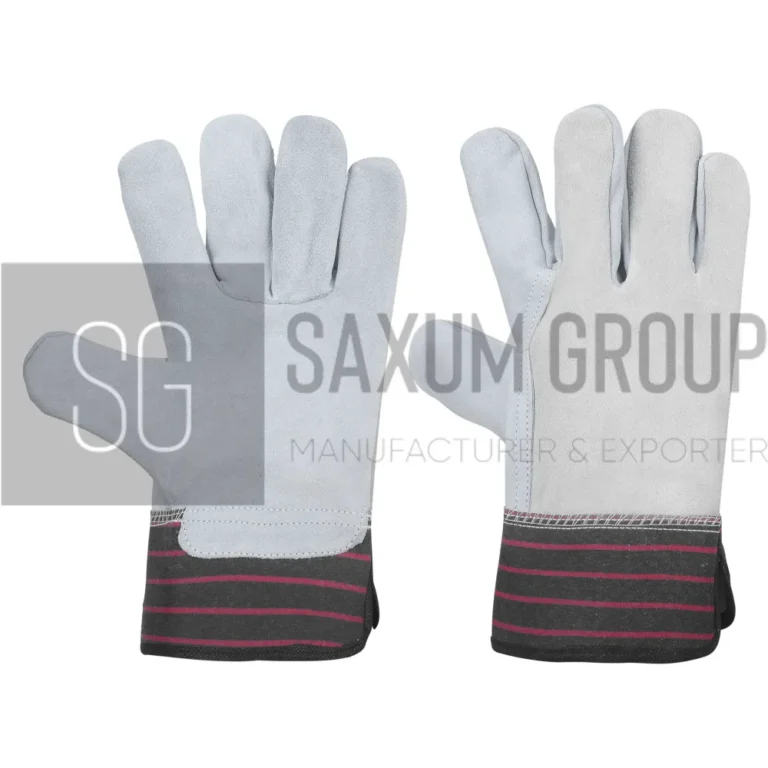
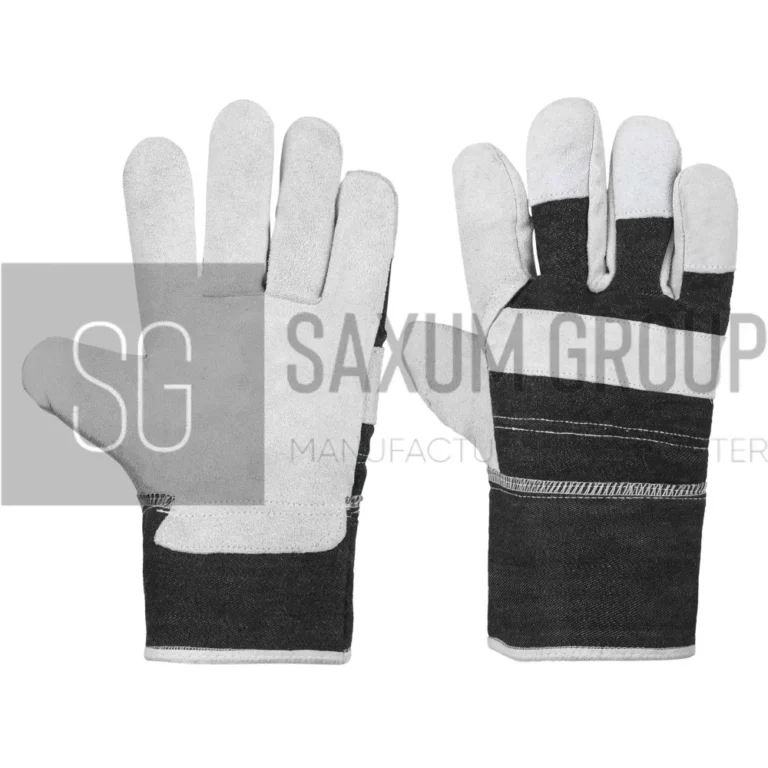
- Leather palm, cotton or canvas back. The rigger glove. Tough where it touches the load, cool and cheap on the back.
- Grain leather palm, stretch synthetic back. A mechanic style glove with a leather palm for wear and a flexible back for fit.
- Leather glove with an aramid lining. Leather outside for abrasion and heat, aramid inside for cut resistance.
- Synthetic leather palm with reinforced patches. Lighter and cheaper than real leather, with extra layers where it wears fastest.
Hybrids let a brand hit a price point and a use case at the same time, which is why they’re popular for private label ranges.
Which Glove for Which Job
| Job | Better choice | Why |
|---|---|---|
| Welding and hot work | Leather | Doesn’t melt, resists sparks and spatter |
| Construction and demolition | Leather or leather palm | Abrasion from rough material |
| Driving and equipment operation | Grain leather | Good grip and feel, long life |
| Auto repair and mechanics | Synthetic | Dexterity, fit, oil resistance |
| Assembly and warehouse picking | Synthetic or coated knit | Feel, breathability, low cost |
| Handling sharp metal or glass | Cut-rated synthetic or lined leather | Tested cut protection |
| Farm, yard and landscaping | Leather palm | Thorns, wood and rough handling |
Cost: Price per Pair vs Cost per Use
Synthetic gloves are often cheaper per pair, especially coated knits. Leather gloves usually cost more up front but last longer in heavy work. For a distributor, that means both have a place: synthetic for high-volume, lower-price lines, and leather for buyers who value durability and protection. It’s also why leather gloves suit private label so well. A branded leather glove feels like a premium product on the shelf.
If you’re working out landed cost from overseas, our guide to importing work gloves from Pakistan explains freight, duties and lead times for buyers in the USA.
Planning a Range With Both Materials
Most distributors don’t need to choose one or the other. A practical range covers the main jobs:
- A leather palm rigger glove for general work.
- A grain leather driver glove for equipment and driving.
- A MIG welding glove and a TIG glove for welders.
- A synthetic mechanic style glove for repair and assembly.
Keep the branding, packaging and size labels consistent across the range so it looks like one family on the shelf. Our custom logo work gloves guide covers the branding side, and the work glove cuff types guide helps you choose the right cuff for each style.
Leather vs Synthetic Work Gloves: Frequently Asked Questions
Are leather gloves better than synthetic gloves?
Neither is better overall. Leather is better for heat, sparks and rough material. Synthetic is better for dexterity, breathability and easy washing. The job decides.
Can synthetic gloves be used for welding?
Generally no. Most synthetic fabrics can melt from sparks and spatter. Welding gloves should be leather, usually split cowhide for MIG and stick, or goatskin for TIG.
What is Amara leather?
Amara is a brand of synthetic microfiber that’s used like leather on the palms of mechanic gloves. It’s soft, thin and flexible, and it stays soft after getting wet, but it doesn’t have real leather’s heat resistance.
Do leather gloves last longer than synthetic gloves?
Under heavy, rough use, usually yes, especially thick split leather. For light work, a synthetic glove can last a long time too, and it’s easier to wash.
Which is better for cold weather?
Lined leather gloves keep the hand warm and block wind well. Insulated synthetic gloves are lighter and dry faster. For cold, wet work, a waterproof insert matters more than the outer material.
Leather Work Gloves From Our Range
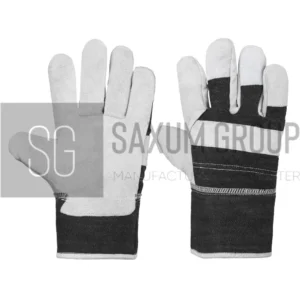
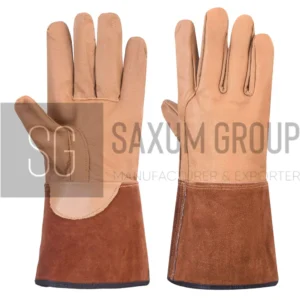
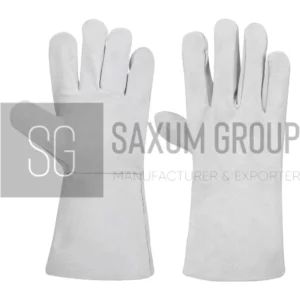
See the full work gloves range →
Leather and Synthetic Work Gloves Made in Sialkot, Pakistan
Saxum Group makes leather work gloves, welding gloves, driver gloves and synthetic mechanic style gloves in our own factory in Sialkot. As a leather work gloves manufacturer in Pakistan, we can build a full range for your brand, in leather, synthetic or a mix, through our private label service. Send us your styles and quantities through our contact page and you’ll get a quote within 24 hours. Comparing suppliers? Our wholesale work gloves supplier guide lists what to check before your first order.