
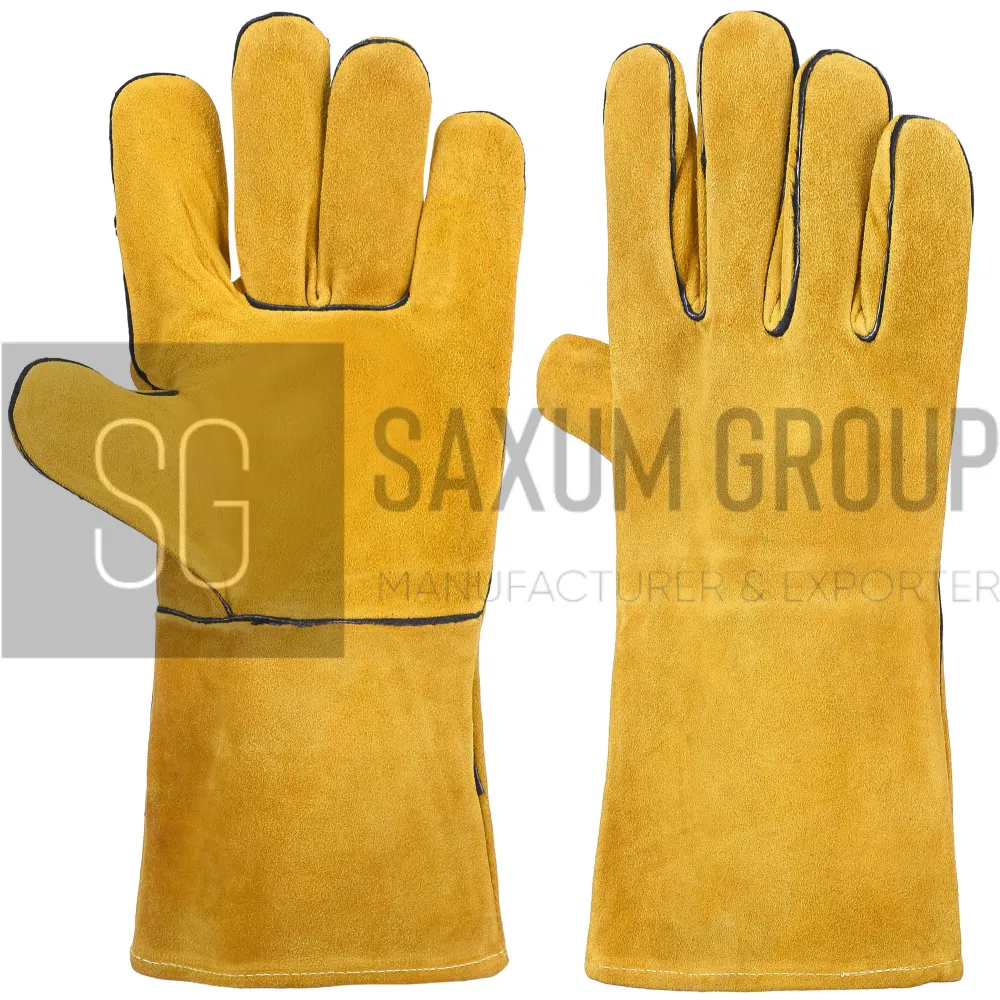
Most buyers who ask us about custom logo work gloves already know what they want the glove to look like. What they’re less sure about is the logo part. Should it be printed or embroidered? Will it last on leather? Where does it go so people actually see it on the shelf? Those small choices decide whether a branded glove looks like a real product or like a stock glove with a sticker on it.
We put other companies’ names on gloves every week in Sialkot, so here’s how it works in practice, what each logo method is good at, and the mistakes we see first-time brands make.
Custom Logo Work Gloves: The Three Main Options
There are three common ways to put a logo on a leather glove: print it, emboss it, or embroider it. Each one suits a different leather, a different budget and a different look.
| Printed | Embossed | Embroidered | |
|---|---|---|---|
| Look | Sharp, full color possible | Pressed into the leather, no ink | Raised thread, classic workwear feel |
| Best on | Smooth grain leather, fabric backs, cuffs | Grain leather and thicker split | Fabric cuffs and backs, some leathers |
| Fine detail | Very good | Limited, keep it simple | Good, but tiny text gets lost |
| Holds up to | Normal wear, can fade on heavy abrasion | Lasts as long as the leather | Very durable |
| Typical use | Rigger and driver gloves, retail ranges | Premium drivers, TIG gloves | Welding gauntlet cuffs, workwear |
Printed logos
Printing is the most flexible option. It handles color well, it copes with detailed artwork, and it works on the fabric back of a leather palm rigger glove just as well as on a smooth leather cuff. That’s why most hardware store ranges use it. A bright back with a clean printed logo reads well from a few feet away on a peg hook.
The catch is wear. On a glove that gets dragged over concrete and steel all day, a print on the palm side won’t last. Put it on the back of the hand or the cuff, where it doesn’t rub, and it stays readable for the life of the glove.
Embossed logos
Embossing presses the logo into the leather with heat and pressure. There’s no ink, so there’s nothing to fade or peel. It looks quiet and expensive, which is why it shows up on premium leather driver gloves and on some TIG welding gloves.
It does have limits. Embossing needs a reasonably firm leather to hold a crisp edge, and very fine lines tend to fill in. A simple wordmark or a bold icon works best. If your logo depends on color to be recognized, embossing alone probably isn’t the right pick.
Embroidered logos
Embroidery is the old workwear favorite. It’s tough, it looks right on a heavy glove, and it suits the canvas or leather cuff of a welding gauntlet. A lot of welding supply brands like it because it matches the embroidered patches on their jackets and caps.
Keep the design bold. Thread can’t hold tiny text the way ink can, so a slogan in small letters under the logo usually turns into a blur. If you need that line, print it on the header card instead.
Where to Put the Logo on a Work Glove
Placement matters as much as the method. A few spots work on almost every style:
- Cuff. The most common spot on gauntlets and rigger gloves. It’s flat, it doesn’t flex much, and it faces outward when the glove hangs on a hook.
- Back of the hand. Great for printed logos on fabric-back gloves. It’s the first thing a buyer sees in the store.
- Wrist tab or binding. Small and neat. Good for a second, smaller mark on premium gloves.
- Sewn-in label. Inside the cuff, with size, care and origin details. Not flashy, but it’s what makes the glove look finished.
Avoid the palm and the fingers. They flex and rub the most, and a logo there wears off or cracks quickly. It also looks odd in use, since nobody sees the inside of a working hand.
Artwork: What to Send Before Sampling
The fastest projects start with clean artwork. A vector file (AI, EPS, PDF or SVG) is ideal because it can be scaled for a cuff or a header card without going fuzzy. If all you have is a JPG or PNG, send it anyway. It’s enough to quote and to make a first sample, though a vector version helps for bulk.
Along with the file, tell us:
- Your brand colors, ideally as Pantone references.
- Which method you want, or let us suggest one based on the glove.
- The size you have in mind, or simply “as big as looks right on the cuff.”
- Any second mark, such as a product line name or a website.
Don’t worry if you’re not sure about every detail. Most of these decisions are easier once you’re holding a sample.
Packaging Is Part of the Brand Too
A logo on the glove is only half of it. For retail, the packaging is what sells the product from the shelf. That usually means a header card with your branding, product name and key features, and a barcode placed where the store wants it. Hang tags work well on premium gloves, and printed boxes suit gift sets or higher-priced lines.
Industrial buyers care more about the outer packing. Gloves usually go in polybags by the pair, packed by the dozen in inner cartons, with your carton marks on the master box. If you’re selling into a big US retailer, send their packaging guide early. Some stores are strict about barcode position, carton labels and the country of origin mark, and it’s much easier to get that right on the sample than to fix it after bulk. Our guide on importing leather work gloves from Pakistan covers the origin marking side in more detail.
How the Custom Logo Process Works With Us
Here’s the usual path from first message to bulk order for private label work gloves:
- Send the brief. The style you want, a photo or sample if you have one, your logo file, rough quantities and sizes. We reply with a quote within 24 hours.
- Pick the leather and details. We’ll go over leather type and grade, lining, cuff and colors. If you’re stuck between two leathers, our cowhide vs goatskin work gloves comparison is a good place to start.
- Prototype. A quick sample from stock materials so you can check the shape and logo placement.
- Final sample. The glove in the right leather, color and finish, with the logo applied the way it will be in bulk, plus your packaging if it’s ready.
- Bulk production. Once you approve, production starts, with checks at cutting, stitching and packing so every glove matches the approved sample.
Lead times and order sizes depend on the glove, the leather and the logo method, so we confirm them with the quote rather than guess here.
Common Mistakes With Branded Work Gloves
Most problems we see come from the same handful of decisions:
- Too much on the cuff. Logo, slogan, website and phone number all on a 3 inch cuff looks crowded. Keep the glove clean and move the extra text to the header card.
- Thin lines on embossing. Fine details fill in. Ask for a bolder version of the logo for leather.
- Logo color that disappears. A dark navy logo on a dark blue welding gauntlet won’t be seen. Check contrast on the actual leather color, not just on screen.
- Skipping the safety claims check. If your packaging mentions a cut level or a standard, the product needs the test report to back it. Our ANSI cut levels guide explains what those ratings mean. Tell us at the quote stage if you need testing for a specific product.
- Different factories for different sizes. Splitting one style between suppliers is how logos end up in slightly different places. Keep each style with one maker.
Which Gloves Work Best With a Custom Logo?
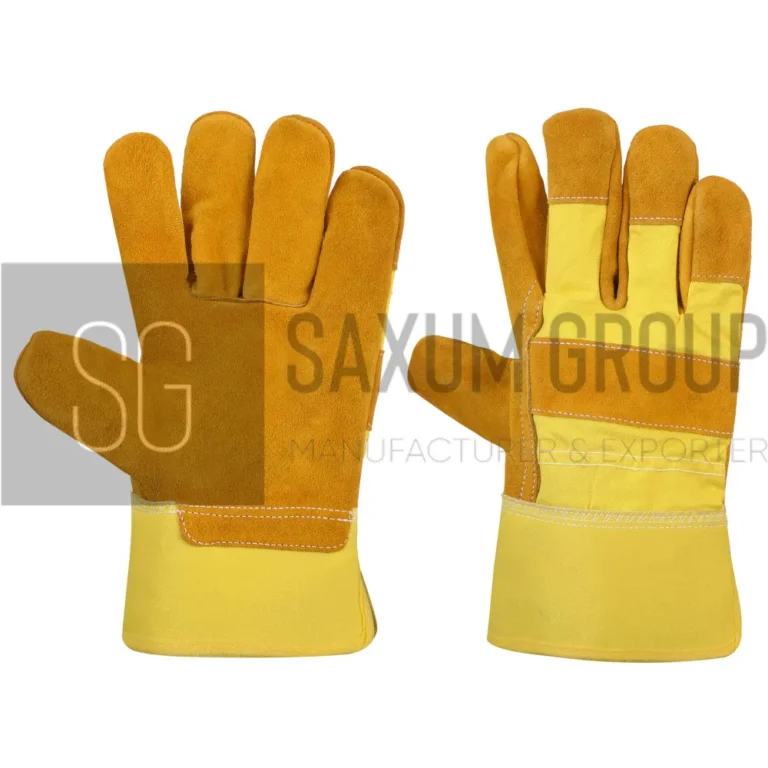
Almost any leather glove can carry a logo, but some styles make it easier. Welding gauntlets have a big, flat cuff that’s perfect for an embroidered or printed logo. Rigger gloves have a fabric back that takes a bright print. Driver gloves suit a small embossed mark for a premium look. TIG gloves usually get a neat print or emboss on the cuff, since the glove itself is thin and light.
A lot of US distributors start with a small set: a MIG gauntlet, a TIG glove and a rigger glove, all carrying the same logo and the same packaging style. It gives them a branded range across the three biggest glove categories without a huge first order. If you’re still working out how buying direct from a factory works, our post on how US distributors buy work gloves wholesale walks through the basics.
Gloves Buyers Often Brand With Their Logo
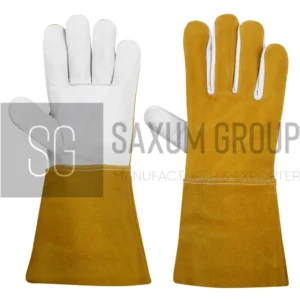
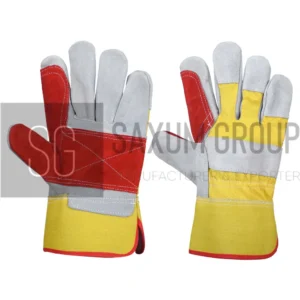
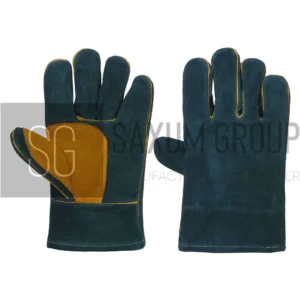
See the full work gloves range →
Start Your Custom Logo Glove Project
Send us the style, your logo file and rough quantities through the contact page or WhatsApp. We’ll suggest the logo method that suits the glove, quote within 24 hours, and make a sample with your branding so you can see it before you commit to bulk.