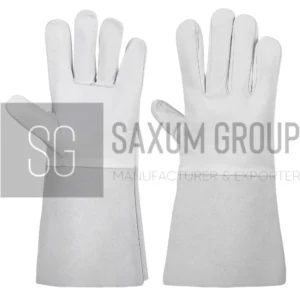
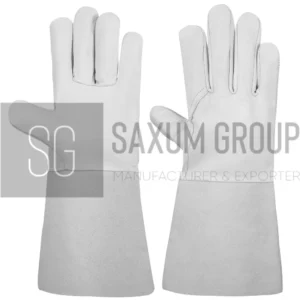
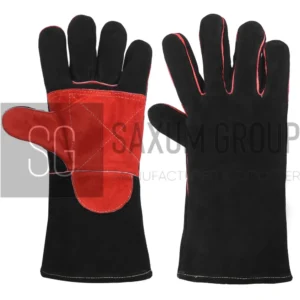
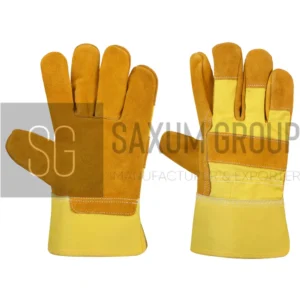
Pick up a cowhide glove and a goatskin glove that look almost the same, and you’ll feel the difference straight away. The goatskin one is thinner and softer. The cowhide one feels sturdier. Both are good leather. They just do different jobs, and picking the wrong one when you compare cowhide vs goatskin work gloves is how distributors end up with gloves that sit on the shelf.
We cut and stitch both every day in Sialkot, so here’s a plain comparison: what each leather is good at, where it struggles, and which gloves in a range should use which.
Cowhide vs Goatskin Work Gloves at a Glance
| Cowhide | Goatskin | |
|---|---|---|
| Feel | Thicker, firmer | Thinner, softer, more flexible |
| Dexterity | Good | Very good |
| Toughness on rough work | Very good | Good for its thickness |
| Handling water | Can stiffen after soaking | Usually stays softer after drying |
| Price | Lower | Higher |
| Typical gloves | Riggers, MIG and stick welding gloves, value drivers | TIG welding gloves, premium drivers, assembly gloves |
Cowhide Work Gloves: The All-Rounder
Cowhide is the most common glove leather in the world, and for good reason. A cow hide is big and thick, so it can be split into layers. The outer grain layer is smooth and tough. The inner split layer is rougher, cheaper and still very hard-wearing. Most leather palm rigger gloves and heavy MIG and stick welding gloves use split cowhide because it takes abrasion, heat and rough handling at a sensible price.
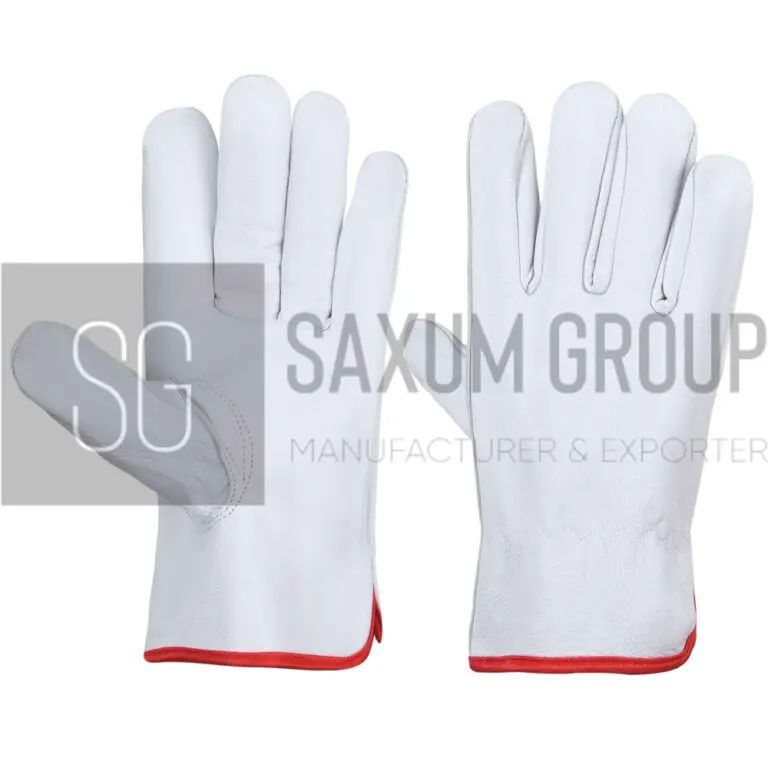
Grain cowhide is used for driver gloves when a buyer wants something tougher and cheaper than goatskin. It breaks in fast and holds up well on construction sites and in warehouses. The trade-off is feel. Cowhide is bulkier, so it’s not the first choice when the job needs fingertip control.
Goatskin Work Gloves: Feel and Flexibility
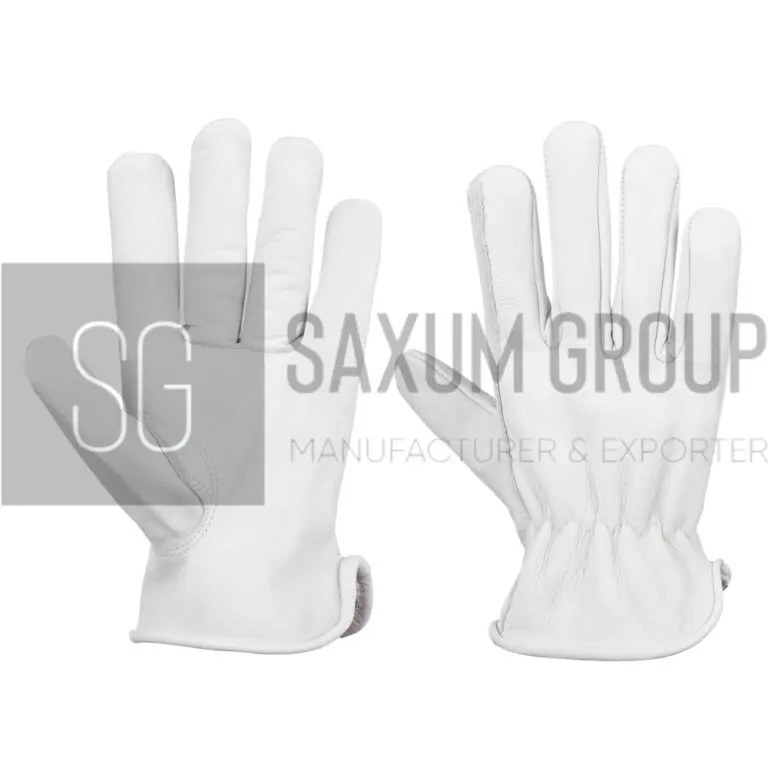
Goatskin is thinner than cowhide, but it’s strong for its thickness, and it’s naturally soft and supple. That’s why welders reach for goatskin TIG welding gloves: TIG needs a light touch on the torch and filler rod, and a thick glove gets in the way. Our guide to Grade A vs Grade AB TIG gloves explains how the leather grade changes the feel again.
Goatskin also makes very comfortable driver gloves. Drivers, delivery crews and fitters like them because they can handle keys, small parts and paperwork without taking the gloves off. Goatskin also tends to stay softer after getting wet and drying, while some cowhide stiffens. Our guide on how to clean leather work gloves shows how to dry either leather without it going hard. The downside is price. Goatskin costs more, so it usually sits on the premium shelf.
What About Pigskin, Deerskin and Elk?
You’ll see other leathers in US catalogs too. Pigskin is porous, so it breathes and stays fairly soft after it gets wet, and it’s common in mid-priced drivers. Deerskin is very soft and comfortable but stretches with wear. Elk is thick and soft and shows up in premium welding gloves. They all have a place, but for most distributors cowhide and goatskin cover the bulk of the range, which is why we focus on those two.
Which Leather for Which Glove?
A simple rule works for most ranges. Use cowhide where the glove takes a beating: rigger gloves, MIG and stick gauntlets, and value driver gloves. Use goatskin where the hand needs to feel what it’s doing: TIG gloves, premium drivers and assembly work. If you sell to both trades and retail, a cowhide driver for price and a goatskin driver for comfort is an easy way to give customers a choice.
Then look at the details that matter more than the leather type. Thickness, stitching around the thumb, the cuff and the fit all decide how long a glove lasts. Our TIG vs MIG vs stick welding gloves guide and the rigger gloves guide cover those checks.
How to Check the Leather When Samples Arrive
Bend the palm a few times. Good leather flexes evenly and doesn’t crack or show pale, papery patches. Feel the thickness across the palm and fingers; it should be consistent, not thick in one spot and thin in another. On grain leather, look for even color and a smooth surface without deep scars in the palm. And put the glove on. A glove that fits well and feels good gets worn, and a glove that doesn’t ends up in a pocket.
Leather origin matters to more buyers now too. We buy leather from Leather Working Group rated tanneries, and you can ask for that in writing with your quote.
Caring for Cowhide and Goatskin Gloves
The care is mostly the same for both, and it’s worth printing on the header card. Knock off dirt and grit after the shift, because grit trapped in the leather wears it from the inside. If the gloves get soaked, let them dry slowly at room temperature, never on a heater or in a hot dryer. That’s what makes cowhide go stiff and crack. A little leather conditioner every so often keeps both leathers supple, and goatskin in particular stays nicer for longer when it isn’t baked dry.
Welding gloves are a slightly different story. Don’t use oily conditioners on them, since oil and heat don’t mix. Just keep them clean and dry, and replace them once the palm or the thumb seam wears thin.
Cowhide and Goatskin in the US Market
In US hardware stores and safety catalogs, cowhide usually covers the everyday price points and goatskin sits a step above as the premium or comfort option. Industrial buyers who replace gloves every week tend to pick cowhide for cost. Contractors and welders who wear the same pair all day often pay more for goatskin because it fits and feels better. A range that offers both lets your sales team trade customers up instead of losing them on price.
Private Label Cowhide and Goatskin Gloves
Most of the gloves we make carry the buyer’s brand. You choose the leather, grade, cuff, colors, logo method and packaging, and we make a sample before bulk production. The process is explained on our private label services page. If you’re buying from Pakistan for the first time, our guide on working with a wholesale work gloves supplier covers samples, customs and shipping to the USA.
Frequently Asked Questions
Is goatskin stronger than cowhide?
For its thickness, goatskin is strong and abrasion resistant. Cowhide is usually thicker overall, so for the roughest jobs a cowhide glove often lasts longer.
Which leather is best for welding gloves?
Goatskin for TIG, where feel matters. Split cowhide for MIG and stick, where heat and spatter matter more.
Can you make the same glove in both leathers?
Yes. Many buyers order one pattern in cowhide and goatskin so they can sell two price points.
How do I get a price?
Send the style, leather, quantities and sizes through our contact page or WhatsApp us at +92 333 8785849. You’ll get a quote within 24 hours.
The Bottom Line
Cowhide is the tough, affordable workhorse for rigger and heavy welding gloves. Goatskin is the thinner, softer choice for TIG gloves, premium drivers and work that needs feel. Most good ranges use both. Browse our leather work gloves range or send us the styles you have in mind.