
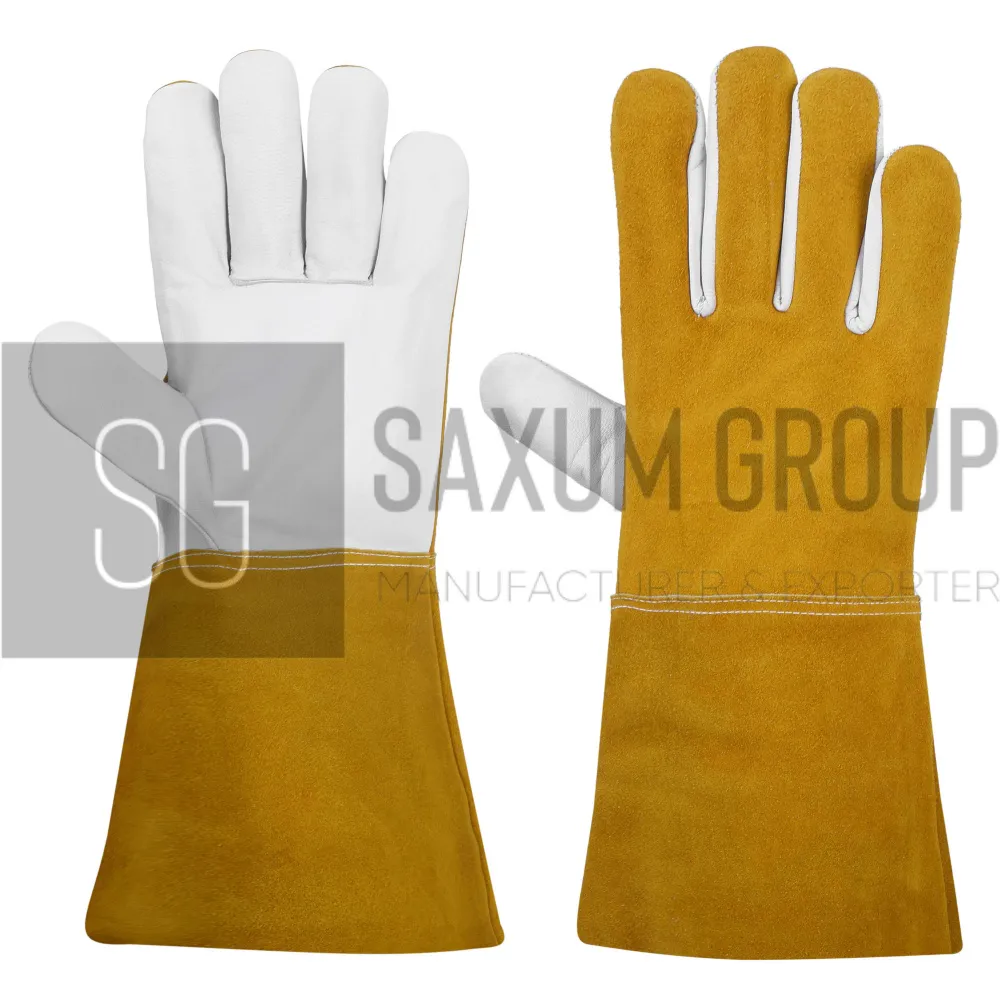
Two leather gloves can come from the same cow and still feel completely different. One is smooth and soft, the other is rough and fuzzy on the surface. That difference has nothing to do with the animal. It comes from which layer of the hide was used. If you buy or sell work gloves, understanding split leather vs grain leather gloves explains most of what you see in a catalog: why some gloves cost more, why TIG gloves feel the way they do, and why welding gauntlets look the way they look.
Here’s a plain explanation from the factory floor in Sialkot, where we cut both every day.
Where Split and Grain Leather Come From
A cow hide is thick, often too thick to use in one piece for a glove. So tanneries slice it into layers. The top layer, the side that had the hair on it, is the grain. It has a tight, smooth surface. The layer underneath is the split. It’s made of looser fibers, so it has a rough, suede-like feel on both sides.
Both are real leather, and both are tough. They just behave differently in the hand and on the job, which is why a good glove range uses each one where it fits.
Split Leather vs Grain Leather Gloves at a Glance
| Split leather | Grain leather | |
|---|---|---|
| Surface | Rough, suede-like | Smooth, tight |
| Feel and dexterity | Good, a bit bulkier | Very good, more supple |
| Abrasion and spatter | Very good, the rough surface takes punishment | Good, but scuffs show |
| Water and dirt | Soaks up more | Sheds more on the surface |
| Price | Lower | Higher |
| Typical gloves | Rigger gloves, MIG and stick gauntlets | TIG gloves, driver gloves |
Split Leather Gloves: Tough and Good Value
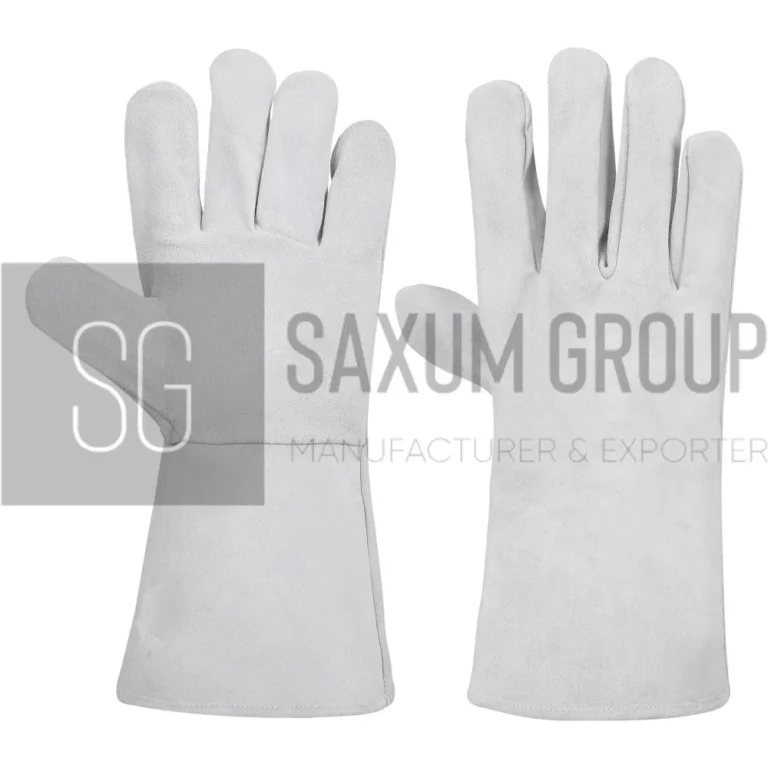
Split leather is the workhorse. Its rough surface hides wear, grips well on dry materials and holds up to heavy abrasion. It’s also cheaper than grain, because each hide gives the tannery extra usable layers. That combination is why most leather palm rigger gloves use a split cowhide palm, and why the majority of heavy welding gauntlets for MIG and stick work are made from split leather.
For welding, split leather has another advantage. It’s thick, and the fuzzy surface tends to shed hot spatter rather than letting it sit. A split leather gauntlet with a long cuff is still the standard glove in most fabrication shops.
The downside is feel. Split leather is a bit bulkier and less precise than grain. For jobs that need a delicate touch, it’s not the best choice.
Grain Leather Gloves: Feel and a Cleaner Look
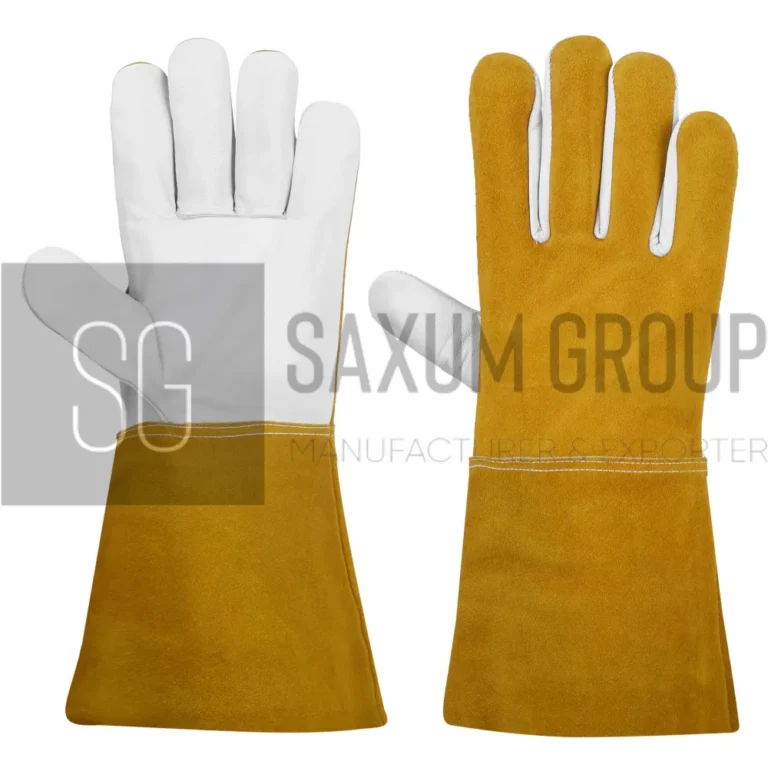
Grain leather is the smooth outer layer, and it’s the more refined of the two. It’s supple, it molds to the hand, and it gives much better fingertip feel. That’s why TIG welding gloves are almost always grain leather. TIG welders need to feed a thin filler rod and control the torch closely, and a bulky split glove makes that harder.
Grain leather is also the standard for driver gloves. Drivers, fitters and warehouse staff like them because they can handle keys, paperwork and small parts without pulling the gloves off. The smooth surface sheds a bit more water and dirt, and it looks smarter, which matters for retail shelves.
The trade-offs are price and toughness on very rough work. Grain costs more, and on concrete, rebar or rough timber the smooth surface scuffs faster than a split palm would.
Full Grain, Top Grain and Split Grades
Catalogs often use a few extra terms. Full grain means the outer surface has been left as it is, with its natural texture. Top grain has been lightly sanded or corrected to even out marks. Both are grain leather and both make good gloves. Full grain tends to be stronger and breathes better, while top grain looks more uniform.
Split leather is also graded, usually by which part of the hide it came from. Splits from the side of the hide are the most even and consistent. Shoulder splits are a little thicker with more variation, and belly splits are softer and stretchier, so they’re used for cheaper gloves. Within each type, suppliers then sort leather into grades like A or AB, depending on marks and consistency. Our guide to Grade A vs Grade AB TIG welding gloves shows how that grading changes the feel and price of a glove.
Gloves That Use Both
A lot of good gloves combine the two. A TIG glove might have a grain leather palm and fingers for feel, with a split leather cuff that takes heat and keeps the price down. Some driver gloves add a split leather patch on the palm for extra wear. Many rigger gloves use a split palm with a fabric back. Mixing layers this way puts the right leather where it’s needed instead of paying for grain everywhere.
The animal matters too. Cowhide is the most common for both split and grain, while goatskin grain is softer and is used for premium TIG and driver gloves. Our cowhide vs goatskin work gloves comparison covers that side of the choice.
Which Should You Stock?
For most distributors, the split from grain decision follows the job:
- Heavy handling, construction and yards: split leather rigger gloves.
- MIG and stick welding: split leather gauntlets with a long cuff. Our welding glove length guide helps with cuff sizes.
- TIG welding: grain leather, cowhide or goatskin.
- Driving, assembly and light work: grain leather driver gloves.
- Retail value lines: split leather keeps the price point low.
- Premium lines: grain leather, with goatskin at the top.
A simple range with one split rigger, one split MIG gauntlet, one grain TIG glove and one grain driver covers the needs of most trade customers. If you’re not sure which welding glove suits which process, our TIG vs MIG vs stick welding gloves guide breaks it down.
How to Tell Them Apart
If you’re checking samples, it’s easy. Run your thumb over the surface. Grain leather is smooth with fine pores you can see up close. Split leather feels fuzzy on both sides and looks the same inside and out. Bend the glove too. Grain leather creases finely, while split leather folds in a softer, thicker way.
Also check the thickness and the consistency across a pair. A good glove has the same leather quality on both hands and across every finger. Patchy, thin areas in a split palm usually mean a lower grade of leather.
Split and Grain Leather Gloves From Our Range
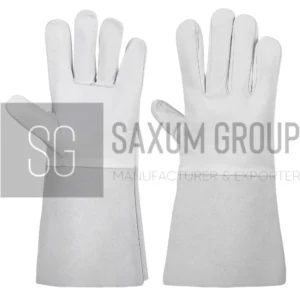
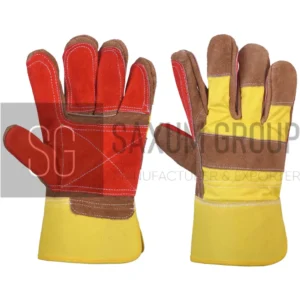
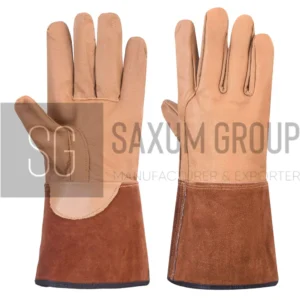
See the full work gloves range →
Need Split or Grain Leather Gloves in Bulk?
We make split and grain leather work gloves and welding gloves in Sialkot, in cowhide and goatskin, under our customers’ own brands, and a lot of that work is for distributors and brands in the USA. Tell us the job the glove needs to do and we’ll suggest the right leather and grade. See how our private label work gloves service works, or send us your styles and quantities for a quote within 24 hours.