
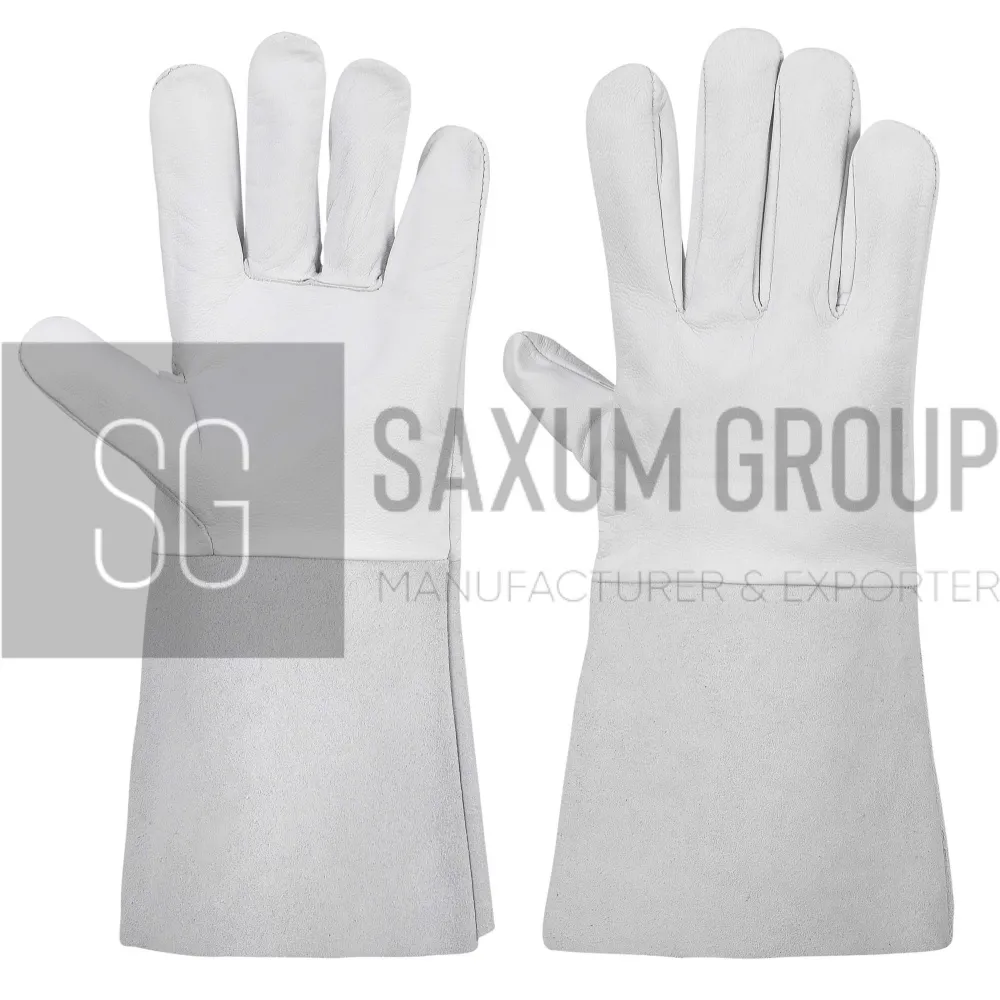
A good pair of leather gloves can last for months, or it can go stiff and cracked in a few weeks. Most of the difference comes down to how they’re cleaned and dried. If you’ve ever left wet gloves on a heater overnight and found them hard as cardboard the next morning, you already know the problem. Knowing how to clean leather work gloves properly isn’t complicated, but a few habits make a big difference.
We make leather gloves in Sialkot, and this is the same advice we give to distributors who get asked by their customers how to look after them. It works for rigger gloves, driver gloves and most welding gloves, with a couple of extra notes for welders at the end.
How to Clean Leather Work Gloves: The Quick Version
- Knock off loose dirt and brush the gloves while they’re dry.
- Wipe them with a damp cloth and a little mild soap or saddle soap.
- Wipe off the soap with a clean damp cloth. Don’t soak the gloves.
- Let them air dry at room temperature, away from heaters and direct sun.
- Flex them a few times while they dry so they stay soft.
- Rub in a thin coat of leather conditioner once they’re dry.
That’s the whole routine. The sections below explain why each step matters and what to change for different gloves.
Step 1: Get the Loose Dirt Off First
Start with the gloves dry. Clap them together, then go over them with a soft brush or an old toothbrush, paying attention to the seams and the area between the fingers. Dirt and grit sitting in the grain act like sandpaper every time the glove flexes, so getting them out before you add water saves the leather.
If the gloves are caked in mud, let the mud dry first. Dry mud brushes off. Wet mud just gets pushed deeper into the leather.
Step 2: Wipe, Don’t Soak
Dampen a cloth, add a small amount of mild soap or saddle soap, and work it over the surface in small circles. Put the gloves on while you do this if you can. It stretches the leather slightly, opens the creases and keeps the glove in its proper shape.
Use as little water as you can get away with. Leather holds natural oils that keep it flexible, and soaking a glove in a bucket washes a lot of them out. That’s what makes gloves stiff and cracked later. When you’re done, wipe off the soap with a second clean, damp cloth.
Skip harsh cleaners. Bleach, solvent degreasers and strong detergents strip the leather and can damage the stitching. If a glove is covered in oil or chemicals that mild soap won’t touch, it’s often safer to replace it than to scrub it with something aggressive.
Can You Put Leather Work Gloves in the Washing Machine?
In most cases, no. A full wash soaks the leather, pulls out its oils and tumbles it hard, and the dryer finishes the job by shrinking it. Some gloves with fabric backs, like many leather palm rigger gloves, can survive a cold, gentle cycle, but the leather palm usually comes out stiffer than it went in. If the care label on your gloves says machine washable, follow it. If there’s no label, hand cleaning is the safe choice.
Step 3: Dry Them Slowly
This is the step most people get wrong. Wet leather dried fast over a heater, a radiator, a stove or in a hot truck cab shrinks and goes hard. Dry it slowly at room temperature instead. Hang the gloves fingers down, or stuff them loosely with paper towels to help them keep their shape and soak up moisture from inside.
While they dry, put them on and flex your hands every few hours. It sounds fussy, but it keeps the fibers moving and stops the glove from setting stiff. Goatskin usually dries softer than cowhide, which is one of the points we cover in our cowhide vs goatskin work gloves comparison.
Step 4: Condition the Leather
Once the gloves are fully dry, rub in a thin coat of leather conditioner with a soft cloth. Work it into the palm and the creases, then wipe off anything that doesn’t soak in. Conditioner puts back the oils that cleaning and sweat take out, and it’s the main thing that keeps leather supple over time.
A little goes a long way. Too much conditioner leaves the glove greasy, which hurts your grip and attracts more dirt. For gloves you use every day, conditioning every few weeks is plenty.
Cleaning Different Types of Leather Gloves
Rigger and general work gloves
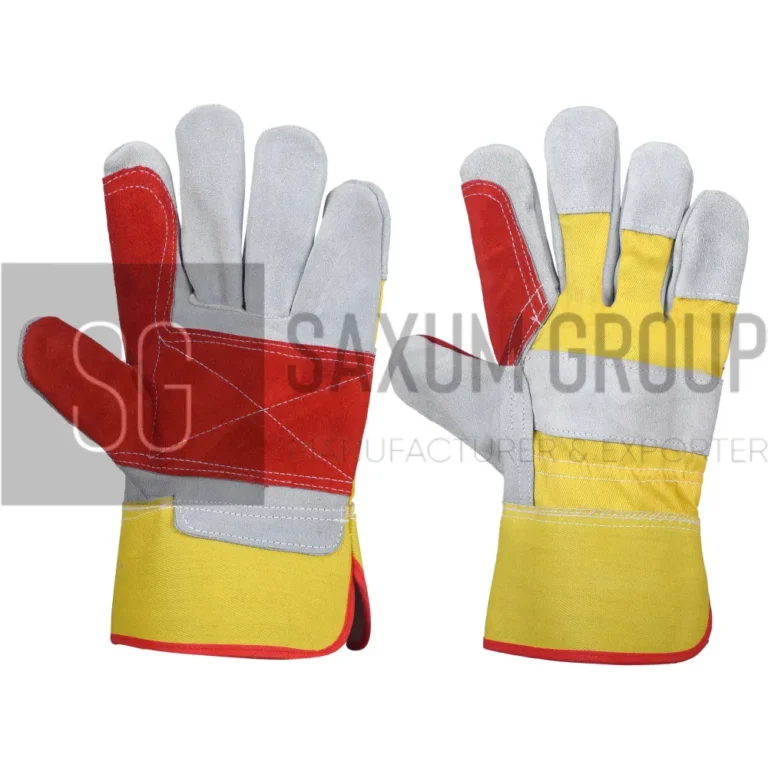
These usually have a split leather palm and a fabric back. Brush the palm, spot clean the back with a damp soapy cloth, and air dry. Split leather is rough on the surface and hides dirt well, so it rarely needs a deep clean. Our rigger gloves guide covers the different palm and cuff styles if you’re choosing a replacement pair.
Driver gloves
Grain leather driver gloves have a smooth surface that shows marks more easily, but it also wipes clean more easily. A damp cloth with a little saddle soap is usually all they need. Condition them a bit more often than rough gloves, since smooth grain leather can dry out and crack along the knuckles.
Welding gloves
Welding gloves need a little more care, because cleaning can affect how they protect you. Brush off spatter and dust, wipe them lightly, and dry them slowly. Be careful with conditioners. Avoid oily or petroleum-based products on welding gloves, because an oily glove near the arc is the last thing you want. Use a conditioner that’s labeled as suitable for welding or work gloves, or leave them clean and dry.
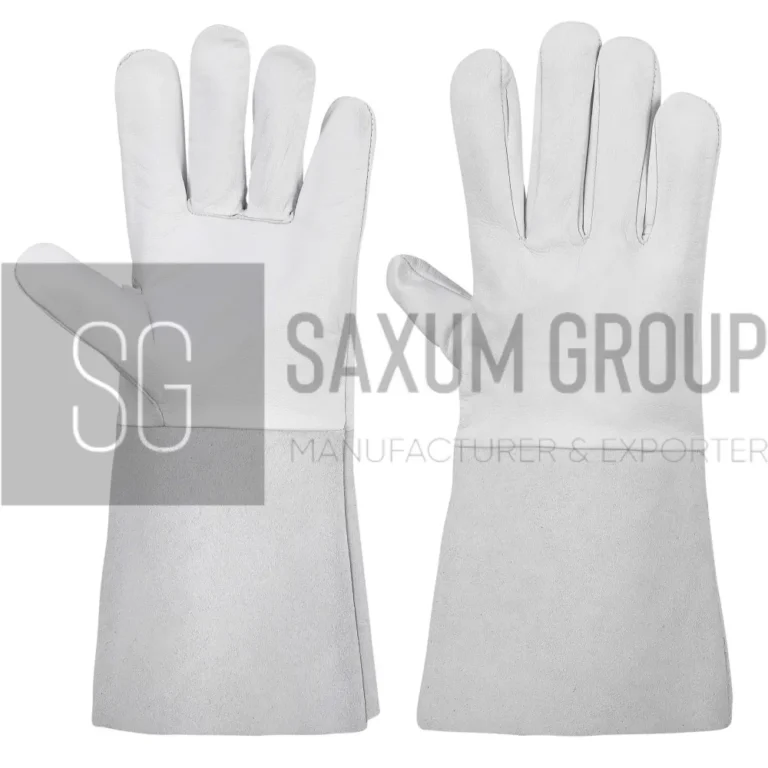
Thin TIG welding gloves are worth looking after well, since their feel is the reason you bought them. Keep them clean so grime doesn’t stiffen the fingertips, and don’t use them for heavy MIG or stick work where they’ll burn through. If you’re not sure which welding glove fits which job, our TIG vs MIG vs stick welding gloves guide explains it.
Gloves with cut-resistant linings
Some leather gloves have a cut-resistant liner inside. Treat the leather outside as normal, but check the label for the lining. Heavy washing can affect some liners, and a glove sold with a cut rating only keeps that rating while it’s in good condition. Our ANSI cut levels post explains what those ratings mean.
How to Store Leather Work Gloves
Store gloves somewhere dry and airy, not in a sealed plastic bag or a damp toolbox. Leather that’s put away wet can grow mold, and that smell rarely comes out. Keep them out of direct sun, which dries and fades the leather, and away from fuel, solvents and oils. Laying them flat or hanging them by the cuff helps them keep their shape.
When to Stop Cleaning and Replace Them
Cleaning extends a glove’s life, but it can’t fix everything. Replace gloves when you see:
- Holes, or the palm worn thin enough to feel heat or sharp edges through it.
- Stitching that has split along a finger or the thumb.
- Welding gloves that are burned through, shrunk or hardened from heat.
- Gloves soaked in oil, fuel or chemicals that won’t clean out.
- Leather that stays stiff and cracked even after conditioning.
Worn gloves don’t protect the way new ones do, and a cheap replacement pair costs a lot less than a burn or a cut.
Leather Work Gloves From Our Range

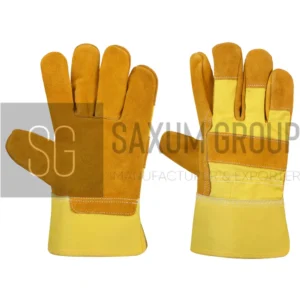
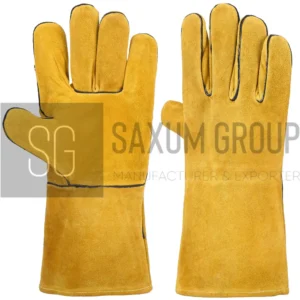
See the full work gloves range →
Selling Leather Gloves to Your Customers?
If you’re a distributor or a brand, simple care tips like these on a header card or your product page help customers get more life from the gloves, and that means fewer complaints. We make leather work gloves and welding gloves under our customers’ own brands, with care instructions printed on labels and packaging when buyers ask for them. See how our private label work gloves service works, or send us your styles and quantities for a quote within 24 hours.