
Most people pick a work glove by its palm. The cuff gets a quick look, if that, even though work glove cuff types differ a lot. But the cuff decides how fast the glove comes off in an emergency, whether sparks and debris get inside, how warm the hand stays, and how well the glove stays put through a shift. Pick the wrong one and a good glove becomes the wrong glove for the job.
We make leather work gloves and welding gloves with every common cuff style in our factory in Sialkot, Pakistan, for distributors and private label brands in the USA and Europe. This guide walks through the main work glove cuff types, what each one is good at, and how to pick the right cuff for your customers.
The short answer
- Safety cuff: stiff, open cuff of about 2.5 inches. Slips off fast if the glove gets caught. The standard on rigger gloves.
- Gauntlet cuff: long, wide cuff that covers the wrist and forearm. Used on welding gloves and wherever sparks or debris fly.
- Elastic or shirred wrist: snug fit that keeps dirt out and the glove in place. Common on driver gloves.
- Knit wrist: closest fit and warmest, but slower to take off. Best for cold or dusty work.
- Short slip-on cuff: easy on and off with nothing extra at the wrist. Good for light handling and short welding gloves.
Why the Cuff Matters More Than It Looks
A cuff does four jobs at once:
- Release. If a glove gets caught in a rotating part or a sharp edge, an open cuff lets the hand pull free. A tight cuff holds on.
- Cover. It protects the wrist and lower arm, the gap between glove and sleeve where sparks, chips and dirt get in.
- Fit. A cuff that grips the wrist stops the glove from sliding forward, which matters for tool control.
- Comfort. Open cuffs let air in and heat out. Closed cuffs keep warmth in, which is good in winter and tiring in summer.
No cuff wins on all four. Every type is a trade-off, so the right choice starts with the job, not the glove.
Safety Cuff
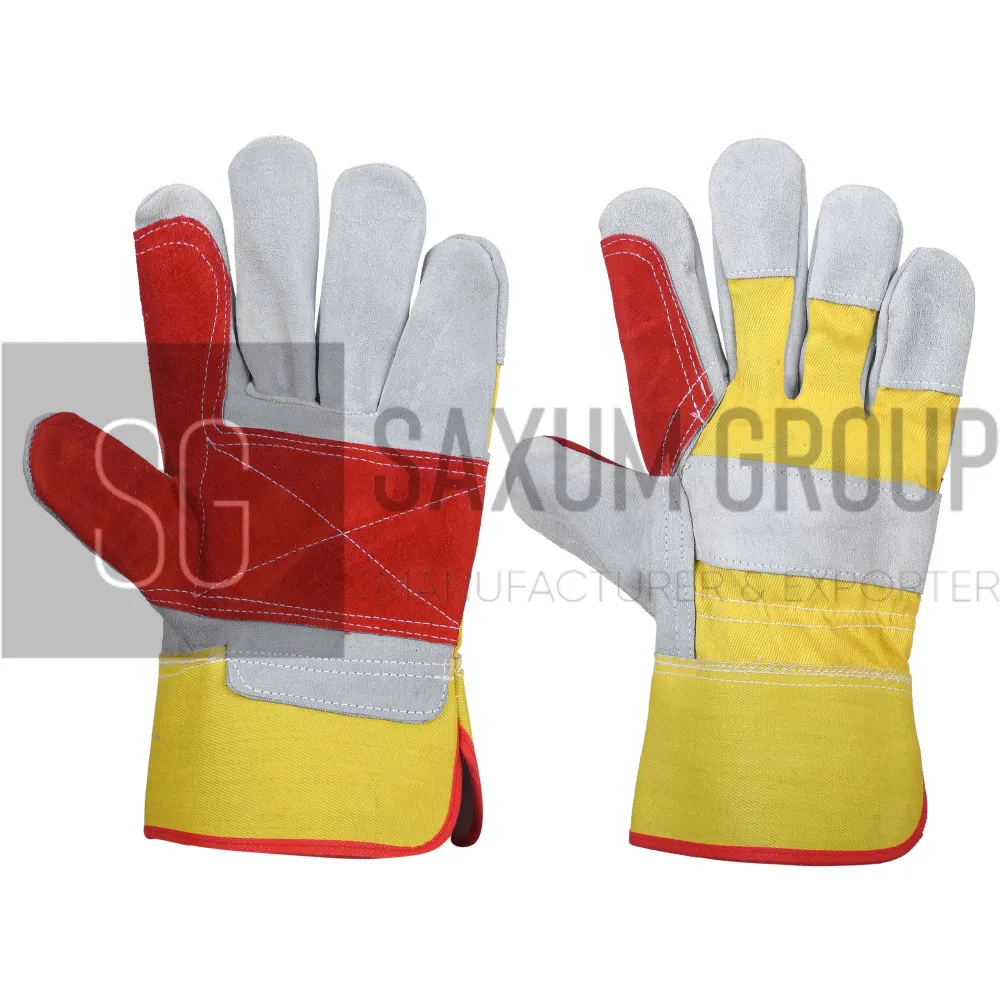
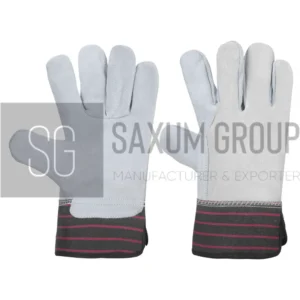
The safety cuff is a short, stiff cuff, usually around 2.5 inches long, made from rubberized canvas or a firm cotton fabric. It stands away from the wrist instead of gripping it. That gap is the whole point: if the glove is pulled by a machine or snags on a load, the hand can slide out.
It’s the standard cuff on leather palm rigger gloves, and it’s why those gloves are so common in construction, rigging, warehouses and general labor. The open design also makes them quick to slip on and off between tasks.
Good for: construction, material handling, rigging, farm and yard work.
Watch out for: debris and sawdust can drop inside, and the cuff gives little cover above the wrist.
Within safety cuffs there are a few variations buyers ask about. A bound safety cuff has its edge finished with a fabric binding, which stops fraying and looks neater on the shelf. A rubberized cuff is coated for more stiffness and better wear. Striped and colored cuffs are mostly about branding and quick size or grade identification, which our rigger gloves guide covers in more detail.
Gauntlet Cuff
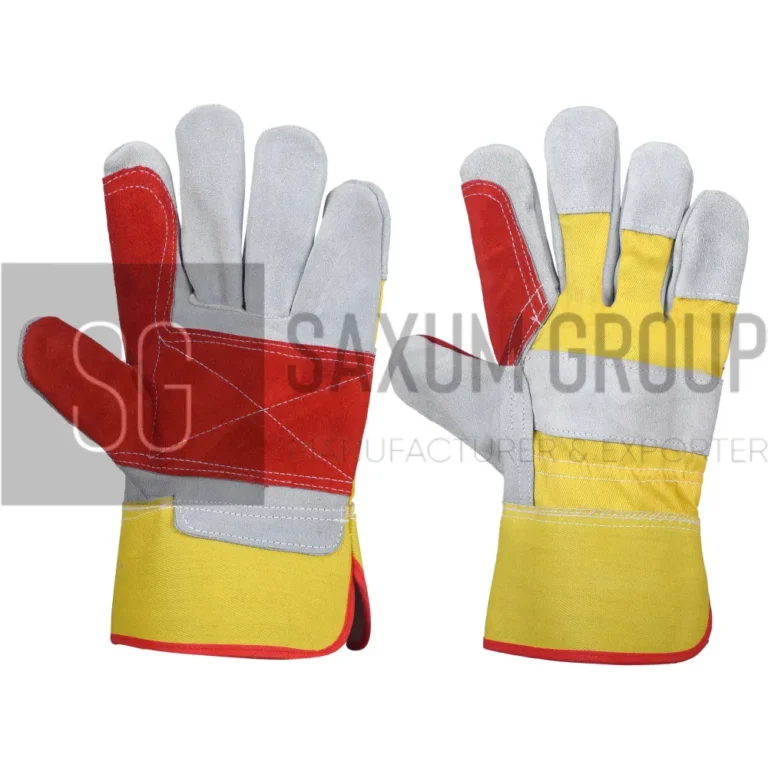
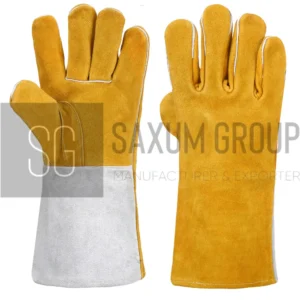
A gauntlet cuff is long and flared, typically reaching well up the forearm. It’s usually made of the same split leather as the glove, so it gives real protection against heat, sparks, spatter and splinters, not just cover.
Gauntlets are the default for MIG and stick welding gloves. The wide opening lets a welder shake the glove off fast if a spark gets inside, and the long leather overlaps the jacket sleeve so nothing drops into the gap. Our welding glove length guide explains how to choose between 13, 14, 16 inch and longer cuffs.
Good for: welding, cutting, grinding, forestry, foundry and handling rough or hot material.
Watch out for: gauntlets are warmer and bulkier, and the wide opening can catch on things in tight spaces.
For more on how gauntlets are built for heat, see our guides to MIG welding gloves and heat resistant leather gloves.
Elastic and Shirred Wrist
An elastic wrist, also called a shirred wrist, has a band of elastic sewn into the back of the glove at the wrist. It pulls the glove snug without a separate cuff. The glove stays put, dirt stays out, and the hand keeps good feel.
It’s the usual choice for leather driver gloves, and it also shows up on rigger gloves with a short cuff, where the elastic holds the glove in place while the cuff stays open. Elastic doesn’t last forever, so for heavy daily use, buyers often specify a wider band or a stronger elastic.
Good for: driving, fitting, warehouse picking, light assembly and any job that needs control.
Watch out for: slower to pull off than a safety cuff, and little protection above the wrist.
Knit Wrist
A knit wrist is a stretchy ribbed cuff, like the end of a sweatshirt sleeve, sewn onto the glove. It seals the wrist closely, which keeps out cold air, dust and small debris better than any other cuff.
Knit wrists are popular on winter work gloves and on gloves for dusty jobs like demolition or agriculture. The catch is release: a knit wrist holds the glove on firmly, so it’s a poor choice anywhere near rotating machinery.
Good for: cold weather work, dusty jobs, landscaping.
Watch out for: not for machine work where a quick release matters.
Short Slip-On Cuff
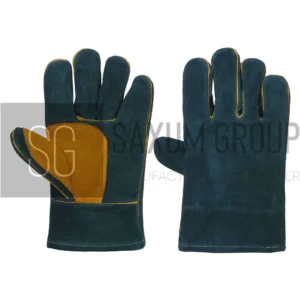
Some gloves have almost no cuff at all, just a short finished edge at the wrist. They’re light, cool and very easy to put on. Short cuff welding gloves are a good example: welders on light MIG or TIG work like them because they don’t get in the way of a jacket sleeve.
Good for: light handling, short welding jobs, workers who change gloves often.
Watch out for: no wrist cover at all, so the sleeve has to do that job.
Work Glove Cuff Types Compared
| Cuff type | Quick release | Wrist and arm cover | Keeps debris out | Typical gloves |
|---|---|---|---|---|
| Safety cuff | Very good | Some | Fair | Rigger gloves, general work gloves |
| Gauntlet cuff | Good | Very good | Good | MIG and stick welding gloves, foundry gloves |
| Elastic wrist | Fair | Little | Good | Driver gloves, fitter gloves |
| Knit wrist | Poor | Little | Very good | Winter and dusty work gloves |
| Short slip-on | Very good | None | Fair | Short welding gloves, light handling |
How to Choose the Right Cuff
A few questions sort out most decisions:
- Is there rotating machinery nearby? If yes, avoid knit wrists and favor a safety cuff or short cuff that releases easily.
- Are there sparks, spatter, splinters or hot material? Go for a leather gauntlet that overlaps the sleeve.
- Does the job need fine control? An elastic wrist keeps the glove from shifting.
- Is it cold or dusty? A knit wrist seals best, as long as release isn’t an issue.
- How often do workers take gloves on and off? Open cuffs save time on jobs with lots of switching.
Hand size matters too. A cuff that’s right on paper can still pinch or gape if the glove is the wrong size, so check our work glove size chart when you plan a range.
Cuff Options for Private Label and Bulk Orders
For distributors and brands, the cuff is one of the easiest places to make a glove range your own. When we make private label work gloves, buyers choose:
- The cuff type and length, matched to the job each glove is sold for.
- Cuff material: rubberized canvas, cotton, denim, split leather or grain leather.
- Colors and stripes, often used to tell product lines or sizes apart on the shelf.
- Your logo printed on the cuff, or a woven label sewn inside. Our custom logo work gloves guide explains the options.
- Edge finish: bound, hemmed or raw cut.
If you’re comparing suppliers, ask for samples with two or three cuff options side by side. It’s the quickest way to see what suits your customers. Our wholesale work gloves supplier guide lists the other things worth checking before a first order.
Work Glove Cuff Types: Frequently Asked Questions
What is a safety cuff on a work glove?
A safety cuff is a short, stiff cuff that stands away from the wrist so the glove can slip off quickly if it gets caught. It’s the standard cuff on leather palm rigger gloves.
What is the difference between a safety cuff and a gauntlet cuff?
A safety cuff is short and stops around the wrist. A gauntlet cuff is much longer and wider and covers part of the forearm. Gauntlets protect more, while safety cuffs are lighter and cooler.
Which cuff is best for welding gloves?
For MIG and stick welding, a leather gauntlet cuff is best, because it covers the gap under the jacket sleeve. TIG welders often use a shorter cuff for better feel, as our TIG vs MIG vs stick welding gloves guide explains.
Are knit wrist gloves safe around machinery?
Usually not. A knit wrist holds the glove on tightly, so if the glove is caught by a moving part, the hand may be pulled in with it. Use a cuff that releases easily around machines.
Can I order the same glove with different cuffs?
Yes. Because we make to order, most of our rigger and welding gloves can be made with a different cuff type, length or color.
Gloves in Different Cuff Styles
See the full work gloves range →
Work Gloves With the Cuff You Need, Made in Sialkot
Saxum Group makes rigger gloves, welding gauntlets, driver gloves and short cuff gloves in our own factory in Sialkot. As a leather work gloves manufacturer in Pakistan, we build each glove with the cuff your customers need, in your colors and with your logo. Send us a photo, a sample or a spec through our contact page and you’ll get a quote within 24 hours. Buying from Pakistan for the first time? Our guide to importing work gloves from Pakistan walks buyers in the USA through each step.