
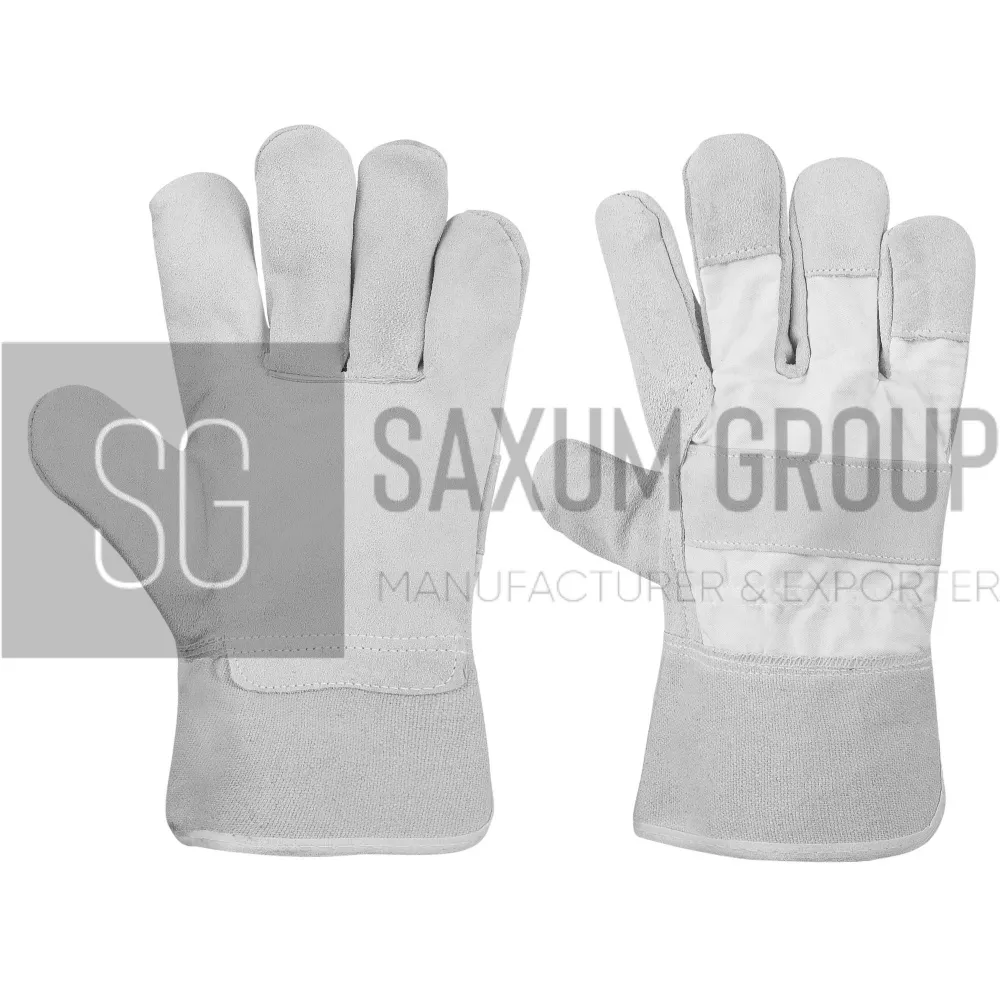
A new pair of leather work gloves can feel like cardboard. The fingers don’t want to bend, the palm is stiff, and gripping a hammer or a rope takes more effort than it should. Give them a few days and the same gloves soften, mold to your hand and feel better than anything new on the shelf. The question is how to get there faster without ruining the leather.
We make leather work gloves and welding gloves in our factory in Sialkot, Pakistan, and we hear the same question from buyers and wearers in the USA: how to break in leather work gloves quickly and safely. This guide covers the methods that work, the ones that damage leather, and how to save a pair that went stiff after getting wet.
The short answer
- Wear them. The best way to break in leather work gloves is to use them for real work. Body heat and movement do most of the job.
- Flex them. Make fists, bend each finger and roll the palm in your hands for a few minutes at a time.
- Condition lightly. A thin coat of leather conditioner on grain leather helps. Wipe off what doesn’t soak in.
- Never use direct heat. No ovens, dryers, heaters or hair dryers on high. Heat makes leather shrink and crack.
- Welding gloves are different. Don’t oil them. Oily leather is a fire risk near the arc.
Why New Leather Gloves Feel Stiff
Leather is made of tightly packed fibers. In a new glove those fibers haven’t moved much yet, so the leather resists bending. As you wear the glove, the fibers loosen at the points where your hand bends, the leather takes the shape of your hand, and the glove starts to feel like it’s yours.
How stiff a glove feels at first depends mainly on the leather:
- Thick split cowhide is the stiffest when new and takes longest to break in. It’s used for heavy work and welding gloves.
- Grain cowhide is smoother and softens faster. It’s common on driver gloves.
- Goatskin is thin and soft almost from the first day.
Our split vs grain leather gloves and cowhide vs goatskin guides explain why the leather makes such a difference.
How to Break In Leather Work Gloves: 5 Safe Methods
1. Wear them for real work
Nothing beats normal use. Wear the new pair for a few hours of the kind of work they’re made for: lifting, carrying, gripping tools. The warmth of your hand and the repeated bending shape the leather exactly where it needs to give. Most leather gloves feel noticeably better after a few days of steady use.
2. Flex and work the leather by hand
If you want them ready sooner, work them between jobs or in the evening. Put the gloves on and make tight fists twenty or thirty times. Bend each finger back and forth. Take them off and roll and squeeze the palm and fingers between your hands. A few short sessions loosen the leather a lot.
3. Grip something round
Wear the gloves and hold a hammer handle, a broom stick or a bat for a few minutes, squeezing and releasing. This shapes the palm and fingers into a natural gripping curve, which is the position work gloves spend most of their time in.
4. Use a light leather conditioner
For grain leather work gloves and driver gloves, a small amount of leather conditioner helps the fibers move. Rub a thin layer into the leather with your fingers, focusing on the knuckles and the palm creases. Let it soak in, then wipe off any extra. Too much conditioner makes gloves greasy and slippery, which hurts grip, so less is better.
5. Wear them slightly damp, then let them air dry
Some workers lightly dampen the gloves with water, wear them until they’re nearly dry, then let them finish drying at room temperature. The leather dries in the shape of the hand. Use this method sparingly and only with a little water. Soaking leather and drying it badly is the most common way to make gloves stiffer, not softer.
What Not to Do When Breaking In Leather Gloves
- Don’t use direct heat. Ovens, tumble dryers, heaters, radiators and hair dryers on high dry out leather, shrink it and make it crack.
- Don’t soak them in oil. Heavy oils, petroleum jelly and cooking oil make leather soft at first but can rot stitching, attract dirt and leave the glove slippery.
- Don’t use harsh chemicals. Solvents and strong cleaners strip the natural oils out of leather.
- Don’t stretch them hard. Pulling gloves over a hard object to stretch them can tear seams. If a glove is too small, a different size is the fix. Our work glove size chart helps you pick the right one.
How to Break In Welding Gloves
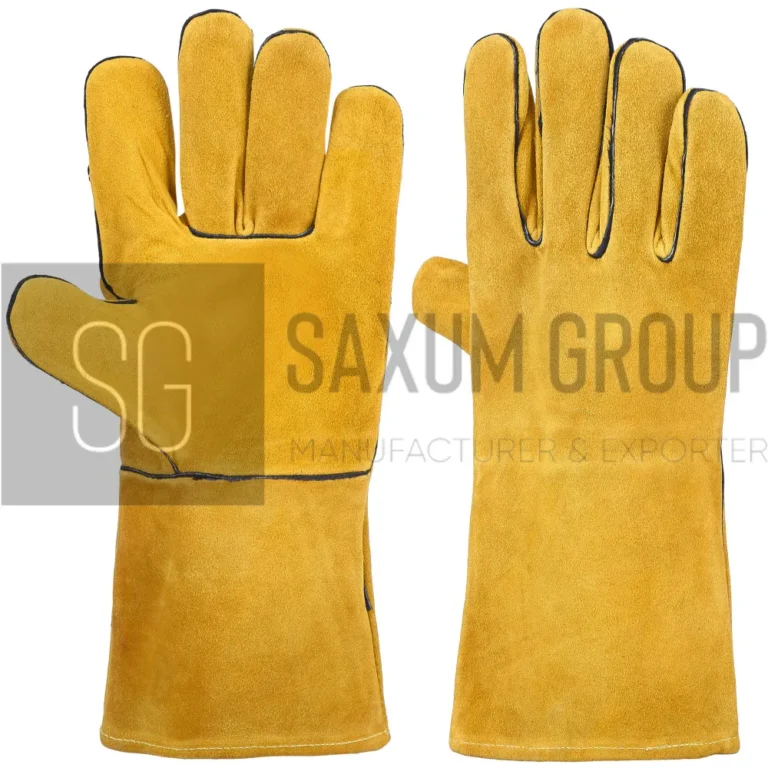
Welding gloves are usually made from thick split cowhide, so they’re often the stiffest gloves in the shop. Breaking them in follows the same idea, with one big difference: don’t oil or heavily condition welding gloves. Oily leather can catch fire more easily from sparks and spatter, which defeats the point of the glove.
Safe ways to break in welding gloves:
- Wear them for normal welding and fabrication work. Heat from the work softens them over time.
- Flex them by hand: make fists, bend the fingers and work the cuff.
- Grip the torch or electrode holder and a hammer handle for a few minutes to shape the palm.
- Keep them dry. If they get damp, let them dry at room temperature, never near the arc or a heater.
If a welding glove is too stiff to control the torch, the glove may simply be the wrong type for the job. Heavy stick welding gloves are built for protection, not feel. For more control, look at MIG welding gloves or thin grain leather TIG gloves. Our TIG vs MIG vs stick welding gloves guide compares them.
How to Soften Leather Work Gloves That Went Stiff
Leather gloves that got soaked and dried on a heater, or went through a washing machine, often come out hard and shrunken. They can usually be saved, at least partly:
- Dampen them slightly with clean water, just enough to make the leather flexible again.
- Put them on and flex your hands for several minutes while the leather is damp.
- Take them off and work in a thin layer of conditioner (skip this step for welding gloves).
- Let them air dry slowly at room temperature, away from heaters and direct sun.
- Flex them again when they’re nearly dry, then once more when fully dry.
Leather that has cracked right through can’t be fixed, and gloves with burned-through seams should be replaced. Our guide on how to clean leather work gloves explains how to wash leather without making it stiff in the first place.
How Long Does It Take to Break In Leather Gloves?
| Glove type | Leather | How it feels when new | Break in |
|---|---|---|---|
| Goatskin driver or TIG glove | Thin grain goatskin | Soft | Very fast, often first day |
| Grain cowhide driver glove | Grain cowhide | Slightly firm | A few days of use |
| Rigger glove | Split leather palm | Firm palm, soft back | A few days to a week |
| Double palm work glove | Two layers of split leather | Stiff palm | About a week or more |
| Welding gauntlet | Thick split cowhide | Stiff | One to two weeks of regular use |
These are rough guides. Thickness, tanning and how hard the gloves are used all change the time. Double palm work gloves and rigger gloves sit in the middle.
For Brands: Gloves That Need Less Break In
If your customers complain that gloves are too stiff out of the pack, the fix usually starts at the factory, not the shelf. Softer leather grades, a thinner palm, grain leather on the palm instead of split, or a tumbled finish all make a glove more comfortable from day one. The trade-off is often durability, so the right balance depends on the job. List the leather, thickness and finish clearly in your spec. Our work glove tech pack guide shows how, and our Grade A vs Grade AB guide explains leather grades.
How to Break In Leather Work Gloves: Frequently Asked Questions
What is the fastest way to break in leather work gloves?
Wear them for real work and flex them by hand between jobs. Making fists, bending each finger and gripping a round handle for a few minutes at a time speeds it up a lot.
Can I use Vaseline to soften leather gloves?
It’s better not to. Petroleum jelly makes leather greasy and slippery and can weaken stitching. A proper leather conditioner in a thin layer works better. Don’t use either on welding gloves.
Should I put leather work gloves in hot water?
No. Hot water and fast drying shrink leather and make it hard. If you need moisture, use a little cool water and let the gloves air dry.
Can you put leather work gloves in the dryer?
No. Tumble dryer heat shrinks and cracks leather. Always air dry leather gloves at room temperature.
How do I soften welding gloves?
Wear them, flex them and grip your tools. Avoid oils and heavy conditioners, because oily leather can catch fire more easily near the arc.
Leather Gloves From Our Range
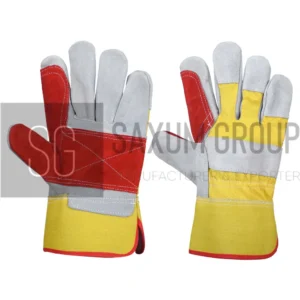
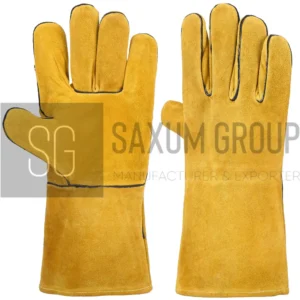
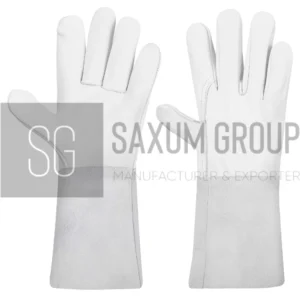
See the full work gloves range →
Leather Work Gloves Made in Sialkot, Pakistan
Saxum Group makes rigger gloves, driver gloves, welding gauntlets and TIG gloves from cowhide and goatskin in our own factory in Sialkot. As a leather work gloves manufacturer in Pakistan, we can match the leather, thickness and finish to how soft your customers want the glove to feel. Ask about it through our private label service, or send your styles and quantities through our contact page and you’ll get a quote within 24 hours. Buying from Pakistan for the first time? Read our guide to importing work gloves from Pakistan.