
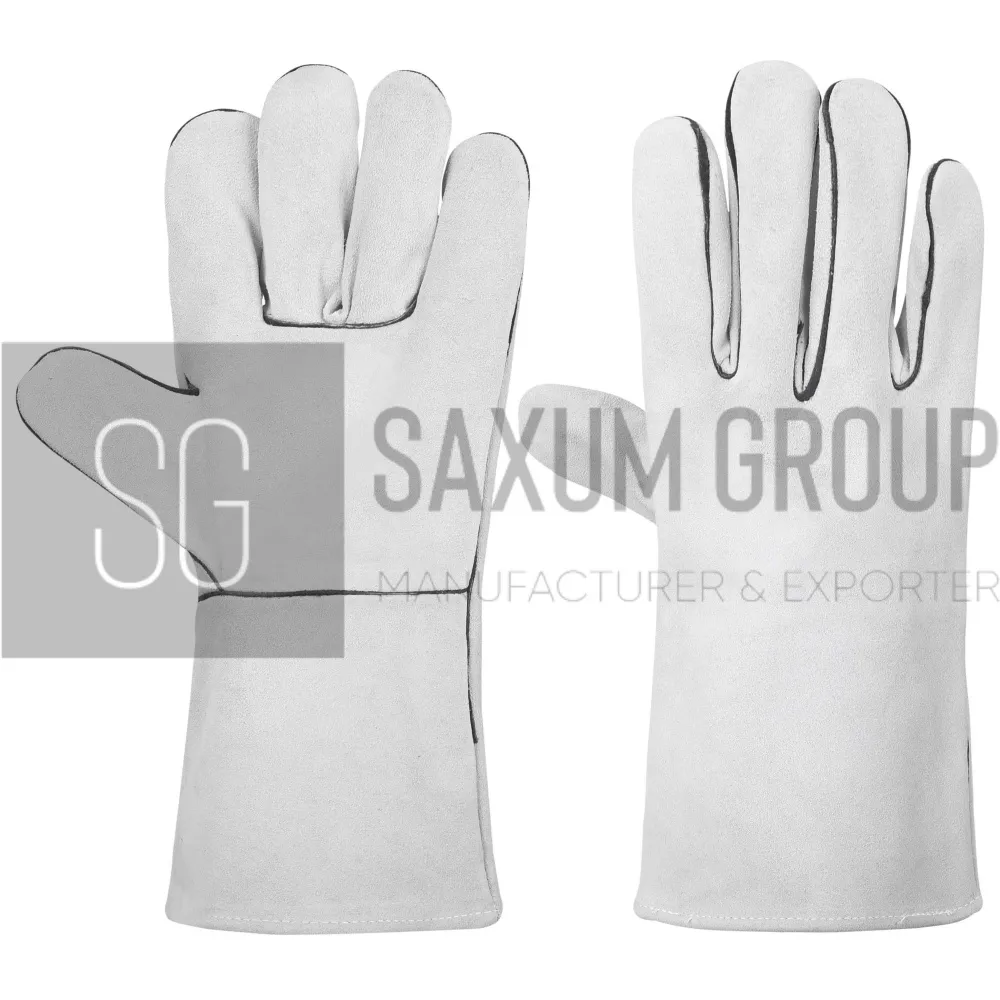
Ask ten welders how long their gloves last and you’ll get ten answers. One goes through a pair of stick gauntlets in two weeks on a pipeline job. Another has worn the same TIG gloves for months. Both are telling the truth. How long welding gloves last depends far more on the process, the hours and how the gloves are treated than on any number printed on the pack.
We make leather welding gloves for MIG, TIG and stick welding in our factory in Sialkot, Pakistan, for distributors and brands in the USA and Europe. This guide answers how long do welding gloves last in real terms, shows the signs that a pair needs replacing, and explains how to make leather welding gloves last longer.
The short answer
- There’s no fixed lifespan. For full-time welders, stick and heavy MIG gloves often last a few weeks, and TIG gloves often last longer because there’s less spatter.
- Occasional or hobby welders can get many months or more from one pair.
- Replace them when you see holes, burned-through seams, leather that’s hard and cracked, or heat getting through faster than before.
- Kevlar thread, welted seams, thicker leather and good care all add life.
- Gloves don’t really expire on a shelf, but stored badly they can dry out, stiffen or grow mold.
How Long Do Welding Gloves Last? It Depends on These Five Things
1. The welding process
Stick welding throws the most spatter and heat, so stick gloves wear fastest. MIG is in the middle. TIG has little spatter, so TIG gloves usually fail from abrasion and handling rather than heat. Our TIG vs MIG vs stick welding gloves guide explains the differences.
2. Hours and amperage
A full-time welder running heavy rod all day puts far more heat into gloves than someone tacking brackets on weekends. Higher amperage means more radiant heat and bigger spatter, which dries and burns leather faster.
3. What else the gloves are used for
Grinding, carrying steel, handling rough stock and picking up hot parts wear gloves out faster than welding alone. Many welders keep a cheaper pair of leather rigger gloves for handling and save the welding gloves for the arc.
4. How the glove is built
Thread usually fails before leather. Gloves sewn with Kevlar thread and welted seams last much longer under spatter than gloves with cotton or polyester thread. Thicker split cowhide outlasts thinner leather, and patches on the palm and thumb crotch add life where gloves wear first. Our MIG welding gloves guide covers construction in detail.
5. How the gloves are cared for
Gloves dried on a heater, left wet in a truck or soaked in oil fail much faster than gloves that are kept dry and cleaned of spatter. More on that below.
Typical Life of Welding Gloves by Type
| Glove type | Main wear | Full-time use | Occasional use |
|---|---|---|---|
| Stick welding gauntlet | Heavy spatter, high heat | Often a few weeks | Many months |
| MIG welding gauntlet | Spatter, radiant heat | A few weeks to a couple of months | Many months to a year or more |
| TIG glove | Abrasion, handling | Often longer than MIG or stick gloves | A year or more |
| Lined heavy gauntlet | Heat, spatter | Longer than unlined gloves in the same job | Many months |
These are rough ranges from common shop experience, not test results. Your own numbers will depend on the five factors above. The useful habit is to track it: note when a crew gets new gloves and when they’re replaced, and you’ll quickly know your real cost per month.
7 Signs It’s Time to Replace Your Welding Gloves
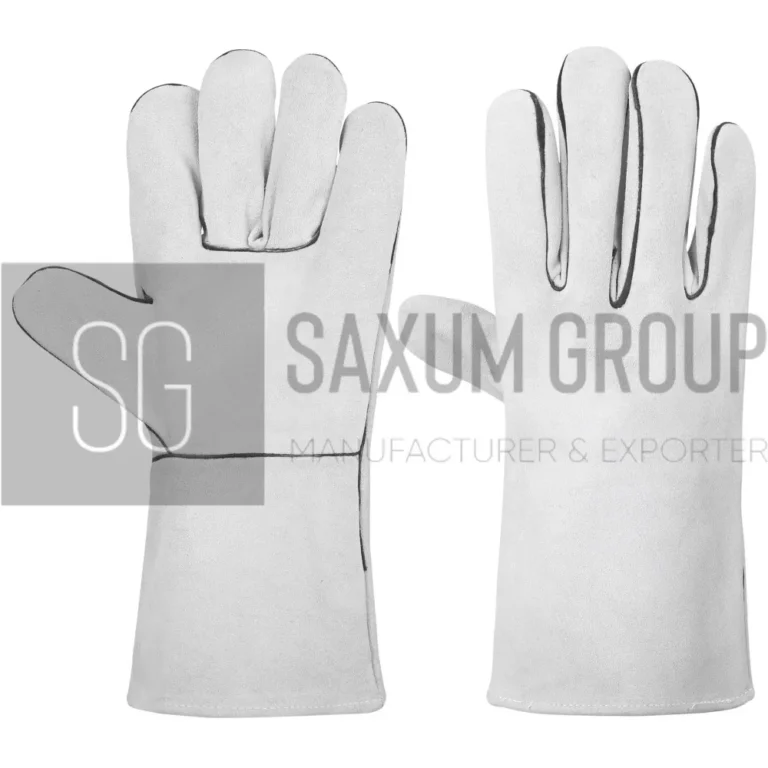
- Holes or burn-throughs anywhere in the leather, especially on the back of the hand and fingers.
- Open or burned seams. Once the thread goes, spatter can get straight to the skin.
- Hard, shrunken or cracked leather. Heat-dried leather protects less and splits easily.
- Heat comes through faster than it used to when you grip hot work or the torch.
- Worn-thin palm or fingertips, often shiny and soft compared with the rest of the glove.
- Oil or grease soaked into the leather. Oily leather can catch fire more easily.
- A damaged cuff that no longer covers the wrist or lets spatter drop inside.
If you see any of these, replace the gloves. A few dollars of savings isn’t worth a burn. Our guide to what temperature welding gloves can withstand explains why worn leather loses so much protection.
How to Make Leather Welding Gloves Last Longer
- Keep them dry. Wet leather that dries badly goes hard and cracks. Air dry damp gloves at room temperature, never on a heater or near the arc.
- Knock off spatter and slag at the end of the shift rather than letting it build up.
- Don’t oil them. Oils and heavy conditioners soften leather but make welding gloves less flame resistant.
- Use the right glove for the job. TIG gloves on stick work burn through fast. Heavy gauntlets on fine TIG work wear out from fighting the torch.
- Use a separate glove for grinding and handling so the welding pair isn’t worn out by abrasion.
- Rotate two pairs. Letting a pair dry out fully between shifts helps the leather last.
- Store them flat and dry, out of direct sun, not crushed in a toolbox.
For breaking in new gloves without damaging them, see how to break in leather work gloves, and for cleaning, our guide on how to clean leather work gloves.
What Makes the Longest Lasting Welding Gloves
When welders talk about the longest lasting welding gloves, the same features keep coming up:
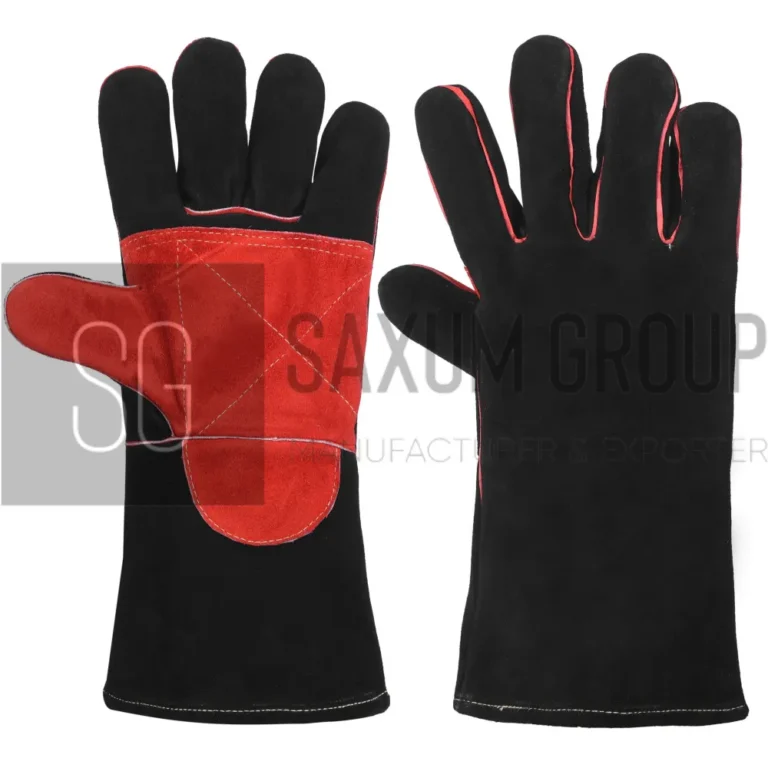
- Thick side split cowhide on the palm and back. Our split vs grain leather gloves guide explains why split leather is used for MIG and stick.
- Kevlar thread throughout.
- Welted seams so the thread is covered.
- Reinforcement patches on the palm, thumb crotch and fingertips. Our double palm work gloves guide shows how extra layers add life.
- A lining on gloves used for high heat, which slows the leather drying out.
- Consistent leather quality. Thin or weak spots fail first. Our Grade A vs Grade AB guide explains leather grades.
For heavy SMAW work, our stick welding gloves guide covers the features that matter most.
Do Welding Gloves Expire?
Not in the way food or some chemicals do. Leather doesn’t have an expiry date. But stock that sits for a long time in bad conditions can dry out and stiffen in heat, or grow mold in damp storage. Keep spare gloves in their packaging, in a dry, cool place, and use older stock first. If a stored pair is cracked, moldy or very stiff when you open it, don’t use it.
For Buyers: Glove Life and Cost per Month
For a distributor or a safety manager, the price per pair is only half the story. A cheaper glove that lasts two weeks can cost more per month than a better glove that lasts five. When you compare suppliers, test gloves side by side on the same crew and track how long each lasts. When you brief a factory, specify the leather thickness, thread, welts and reinforcements that drive glove life. Our work glove tech pack guide shows how, and our wholesale work gloves supplier guide covers what else to check.
How Long Do Welding Gloves Last: Frequently Asked Questions
How long do welding gloves last?
There’s no fixed lifespan. Full-time stick and MIG welders often replace gloves every few weeks, TIG gloves usually last longer, and occasional welders can use one pair for many months. Replace any pair that has holes, open seams or cracked leather.
When should I replace welding gloves?
Replace them when you see holes or burn-throughs, burned or open seams, hard and cracked leather, oil soaked into the leather, or when heat comes through faster than before.
How long do leather work gloves last?
General leather work gloves used daily for handling often last from a few weeks to a few months, depending on the leather, the work and the care. Double palm and thicker split leather gloves usually last longer.
Can I repair welding gloves?
Small seam repairs with Kevlar thread are possible, but once leather is burned through, cracked or worn thin, the glove should be replaced. Repairs don’t restore lost heat protection.
Do expensive welding gloves last longer?
Often, but not always. What matters is the build: thick split leather, Kevlar thread, welted seams and reinforcements. Check those features rather than the price alone.
Welding Gloves From Our Range
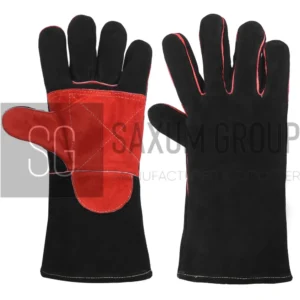
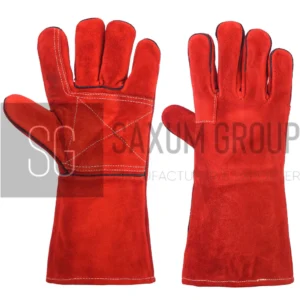
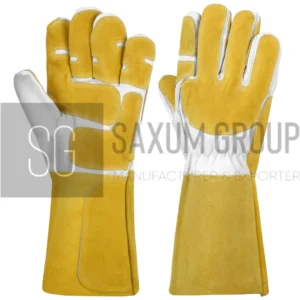
See the full work gloves range →
Long Lasting Welding Gloves Made in Sialkot, Pakistan
Saxum Group makes split cowhide welding gauntlets with welts and reinforced palms, plus grain leather TIG gloves, in our own factory in Sialkot. Browse our welding gloves or the full leather work gloves manufacturer in Pakistan range, and ask about thread, welts and reinforcement options through our private label service. Send your requirements through our contact page and you’ll get a quote within 24 hours.