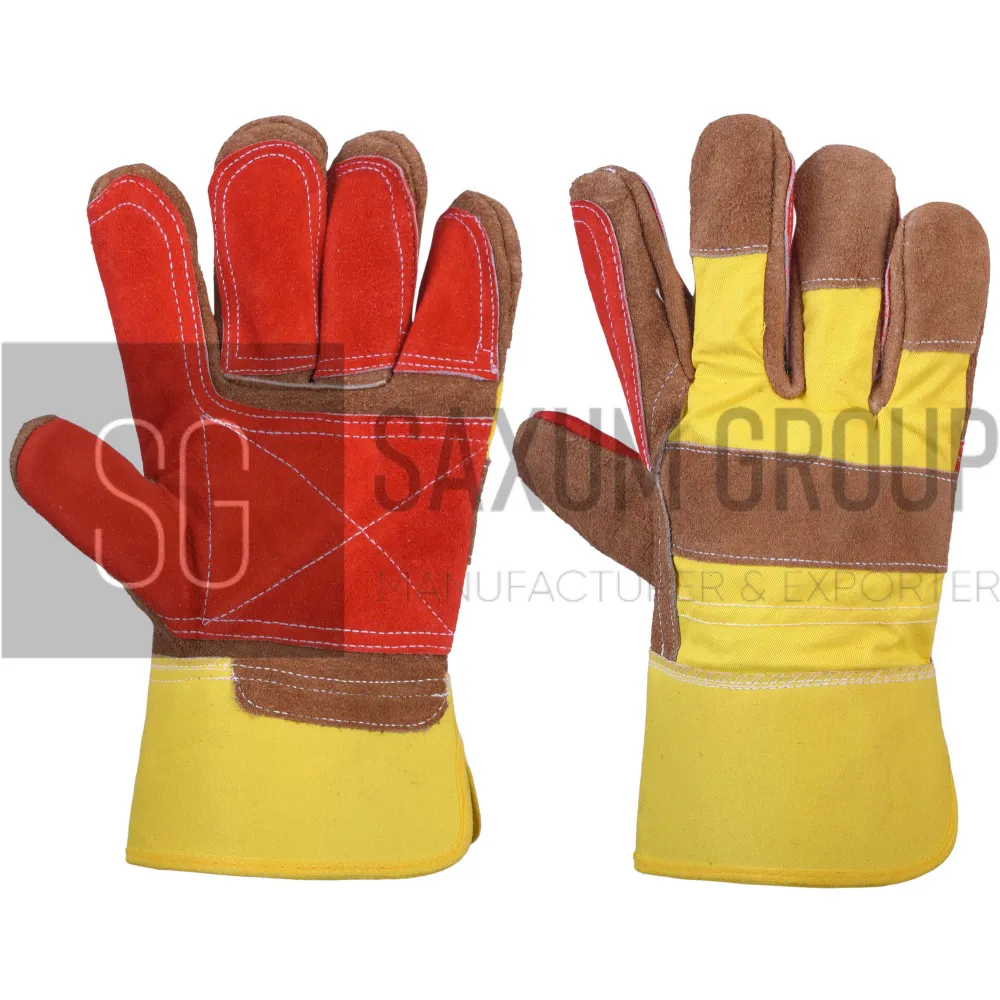
Rigger gloves are leather palm work gloves with a fabric back and a stiff safety cuff. The palm and fingers are usually split cowhide, the back is cotton, denim or canvas so the hand can breathe, and the cuff stands away from the wrist so the glove slips off fast if it snags. That’s the whole idea. Simple, tough, cheap enough to replace, and good for most general handling jobs.
The name comes from rigging work, but these days you’ll see rigger gloves on building sites, in warehouses, on farms and in every DIY shop. We make them every day in Sialkot, so here’s a plain guide to the types, what the differences actually mean, and how to pick the right ones for your customers.
What Makes a Glove a Rigger Glove?
Four things, mostly. A leather palm and fingers. A fabric back. A leather knuckle strap across the back of the hand. And a safety cuff, usually rubberized or canvas. Change any one of those and you get a slightly different glove, which is why a single factory can make dozens of “rigger gloves” that all look a bit different.
If you’ve ever wondered why the fabric back, it’s comfort. Leather all round gets hot and stiff. Cotton on the back lets heat out, and the palm still does the hard work. For rougher jobs there are full leather versions too, which we’ll get to.
Types of Rigger Gloves
Standard single palm riggers
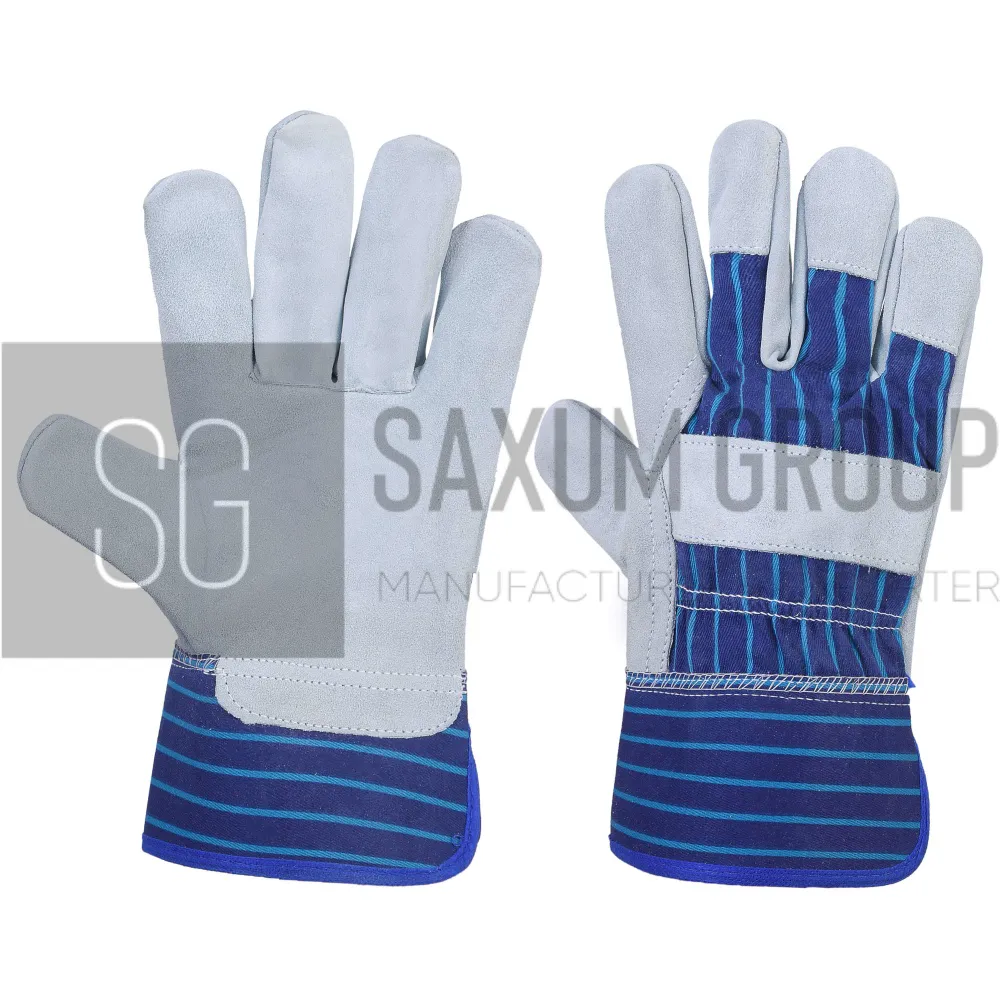
The everyday version. Grey split leather palm and fingers, a cotton back and a safety cuff. It’s the glove most people picture, and the one most buyers stock in the biggest quantities. Our plain white canvas cuff rigger and the navy striped rigger are two classic examples. The navy stripe is the look a lot of UK and European hardware stores use.
Double palm riggers
Riggers wear out at the palm, the base of the thumb and the fingertips first. A double palm glove adds a second layer of leather right there. It costs a little more, but on rough materials like blocks, steel or scaffold tubes it lasts noticeably longer. See the gold double palm rigger or the louder red and brown double palm rigger for how that extra layer is placed.
Reinforced patch riggers
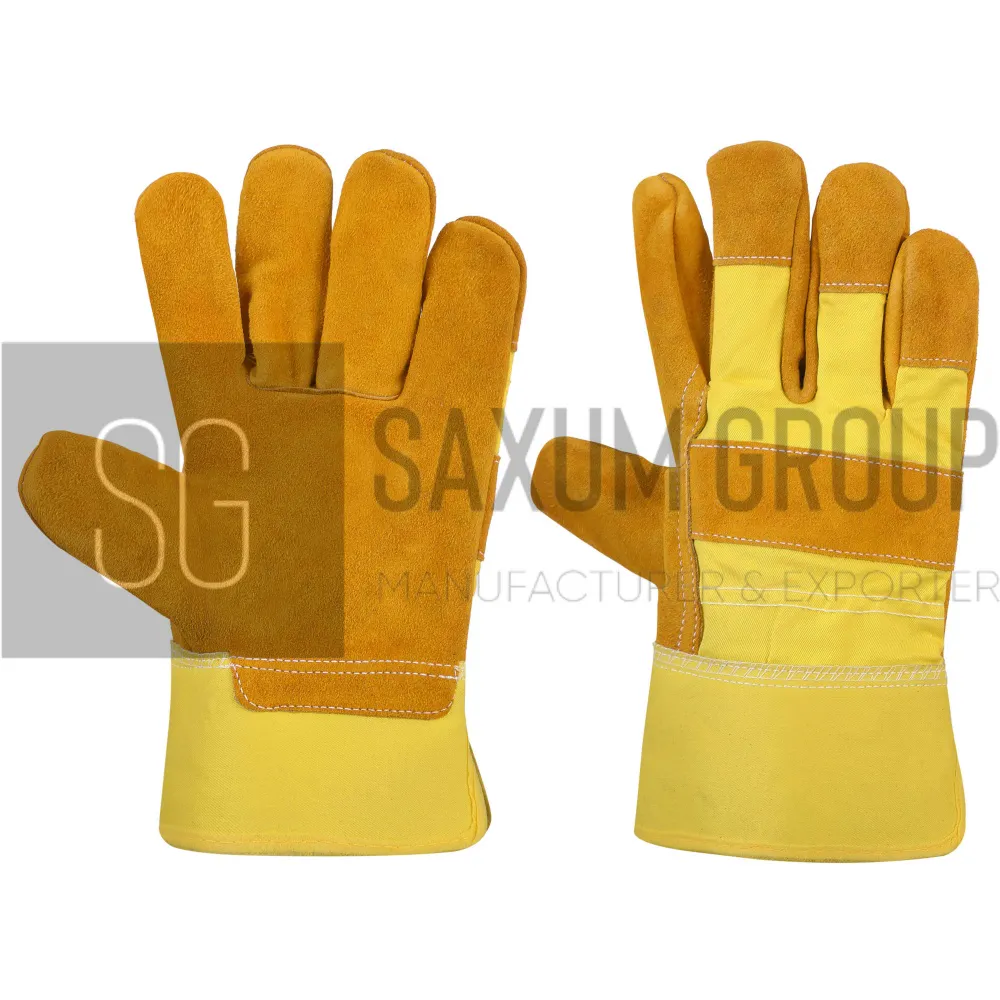
Somewhere between single and double palm. Instead of a full second palm, a leather patch covers the palm and thumb. It’s a good middle option when price matters. The grey rigger with a blue palm patch and the gold rigger with a black palm patch both work this way.
Full leather riggers
No fabric at all. Leather front and back. These are for jobs where a cotton back would snag, scorch or soak through, like handling scrap or sheet metal edges. They’re warmer and heavier, so they suit short rough jobs better than all-day light work. Our full split leather glove with striped cuff is this type.
Denim and elastic wrist riggers
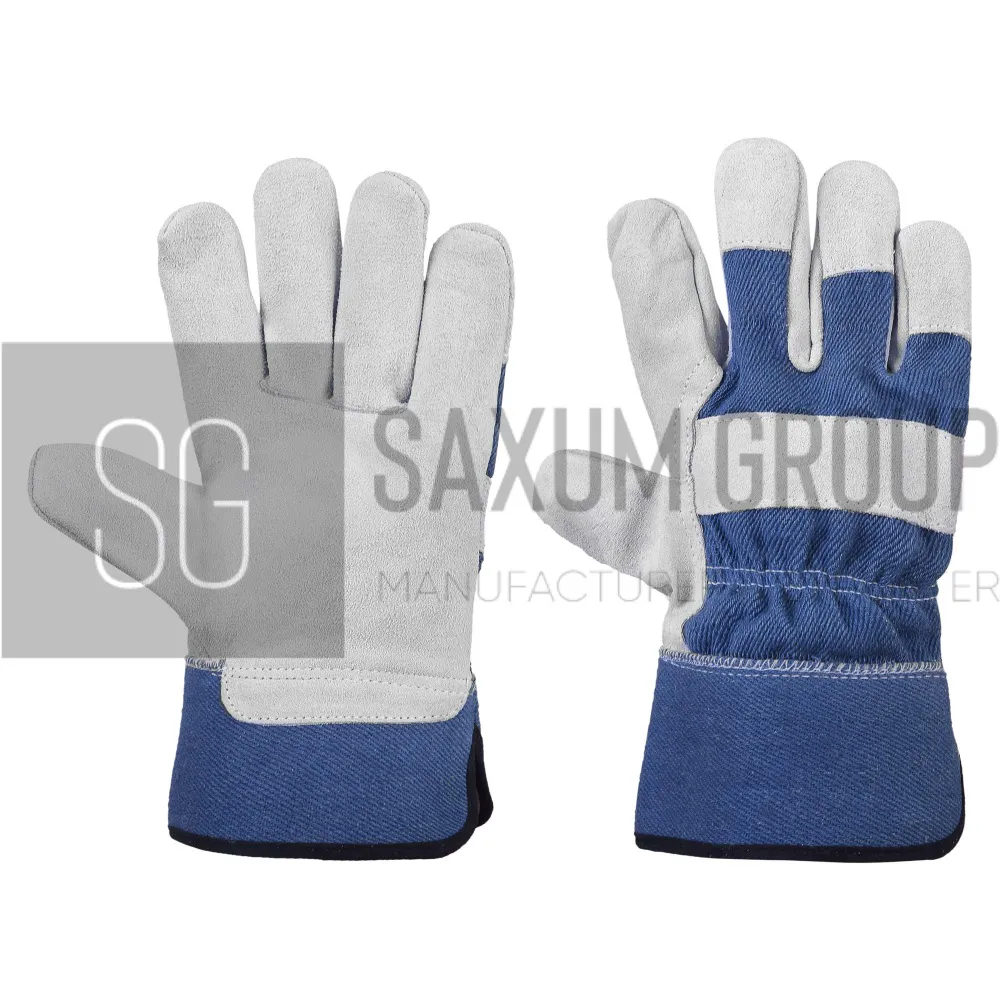
Denim backs are thicker than plain cotton, so they protect the back of the hand a bit better and hide dirt. Some versions add elastic at the wrist to keep the glove snug and keep grit out. The blue denim rigger with elastic wrist is a popular pick with landscapers and warehouse teams.
Rubber Cuff vs Canvas Cuff
| Rubberized safety cuff | Canvas cuff | |
|---|---|---|
| Feel | Stiff, stands away from the wrist | Softer and more flexible |
| Taking it off | Very quick, good if the glove snags | Slightly slower |
| Wrist cover | Firmer | Lighter |
| Best for | Building sites, scaffolding, steel yards | Warehouses, logistics, general handling |
Honestly, plenty of distributors stock both and let their customers choose. The cuff is also one of the easiest places to put a logo.
Split Leather or Grain Leather?
Almost all rigger gloves use split leather, the inner layer of the cowhide. It’s thick, it takes abrasion well and it keeps the price sensible. Grain leather, the smooth outer layer, is softer and gives better feel, but it costs more. If your customers need more feel than a rigger gives, a grain leather driver glove is usually the better answer.
How to Spot a Good Rigger Glove
Two riggers can look identical in a photo and feel completely different in the hand. When samples arrive, check a few things before you place a bulk order.
Start with the leather. Bend the palm. Good split leather feels even and doesn’t crack or show thin, papery spots. Then look at the stitching around the thumb and between the fingers, because that’s where cheap gloves split first. Stitches should be tight, straight and not too far apart.
Next, the cuff. A rubberized cuff should hold its shape when you squeeze it, and the edge binding should be sewn on properly, not just folded. Finally, put the glove on. The fingertips shouldn’t have lots of empty leather, and the thumb should sit where your thumb actually is. A glove that fits badly gets taken off, and a glove in a pocket protects nobody.
Sizes and Fit
Rigger gloves are often sold in one or two sizes, but that’s usually a false saving. A crew with mixed hand sizes ends up with half the gloves too big or too tight. Most buyers do better stocking at least medium, large and extra large, and many add small for warehouse and retail customers. Some distributors use a different cuff colour for each size, which makes picking and restocking much quicker. Tell us your size mix when you ask for a quote and we’ll cut to it.
Which Rigger Gloves Should You Stock?
It depends who ends up wearing them. Construction and scaffolding crews usually want rubber cuff riggers, often double palm. Warehouses do fine with single palm and a canvas or rubber cuff. Farms and landscapers like denim and elastic wrists. DIY and retail buyers care a lot about how the glove looks, so bright backs like the yellow rigger with a red strip or the multicolour striped rigger help on the shelf.
A simple starter range might be one plain grey rigger, one double palm, one denim and one bright retail style. You can see all fifteen styles we make on our working gloves and rigger gloves page.
Private Label Rigger Gloves
Most of the riggers we ship carry the buyer’s own brand. Back fabric, cuff colour, binding, logo, header card and carton marks can all be changed. We start with a quick prototype from stock materials, then make the final sample in the right quality, colour and pattern before bulk production. The full process is on our private label services page, and if it’s your first order from Pakistan, our guide to importing work gloves from Sialkot covers samples, Incoterms and customs.
Frequently Asked Questions
Why are they called rigger gloves?
They were originally popular with riggers, the people who set up ropes, cables and lifting gear. The name stuck, and now it’s used for any leather palm glove with a fabric back and safety cuff.
Are rigger gloves waterproof?
No. Split leather and cotton both soak up water. For wet work, a coated glove or a grain leather glove is a better choice.
Are rigger gloves suitable for welding?
Not really. They aren’t built for heat and spatter. For welding, use a proper leather welding glove.
How do I get a price?
Send us the product code, quantity and size mix through our contact page or on WhatsApp at +92 333 8785849, and you’ll get a quote within 24 hours.
The Bottom Line
A rigger glove is a leather palm, a fabric back and a safety cuff. Pick single palm for everyday handling, double palm or patches for rough materials, full leather when fabric won’t survive, and denim or elastic wrists for comfort. Then match the cuff and colours to your market. Saxum Group has been making leather gloves in Sialkot for over 20 years. Read more about us, or browse the range and send us the codes you like.