
Short answer first. A leather welding jacket gives the most protection against spatter, sparks and molten metal, so it’s the right pick for stick welding, high-current MIG and anything overhead. An FR cotton jacket is lighter and much cooler, which makes it better for TIG, light MIG and long shifts in hot shops. And if you want a bit of both, a hybrid jacket with leather on the front and sleeves and flame retardant cotton elsewhere sits nicely in the middle.
That’s the rule of thumb. But the right jacket really depends on the welding process, the heat in the shop, and how long people wear it. Let’s go through it.
We make leather welding jackets, including one that mixes split leather with flame retardant cotton, at our factory in Sialkot. Buyers ask us this question all the time, usually right after a welder has complained about being too hot, or after someone came home with a burn hole in their shirt.
What each jacket is made of
A leather welding jacket is usually cut from split cowhide or chrome leather. Leather doesn’t melt, it shrugs off most spatter, and it holds up for a long time if you look after it. The downside? It’s heavy and it traps heat.
An FR cotton jacket uses cotton that’s been made flame retardant, either through a chemical treatment or by blending in fibres that resist flame. It’s lighter, softer, it breathes, and it’s far more comfortable when the shop is already hot. It just can’t take the same punishment from heavy spatter.
The hybrid jacket is the compromise. Leather goes where sparks actually land, the chest and the sleeves, and FR cotton goes where you need airflow, like the back. Our premium soft split leather welding jacket with flame retardant cotton fabric is built exactly like this.
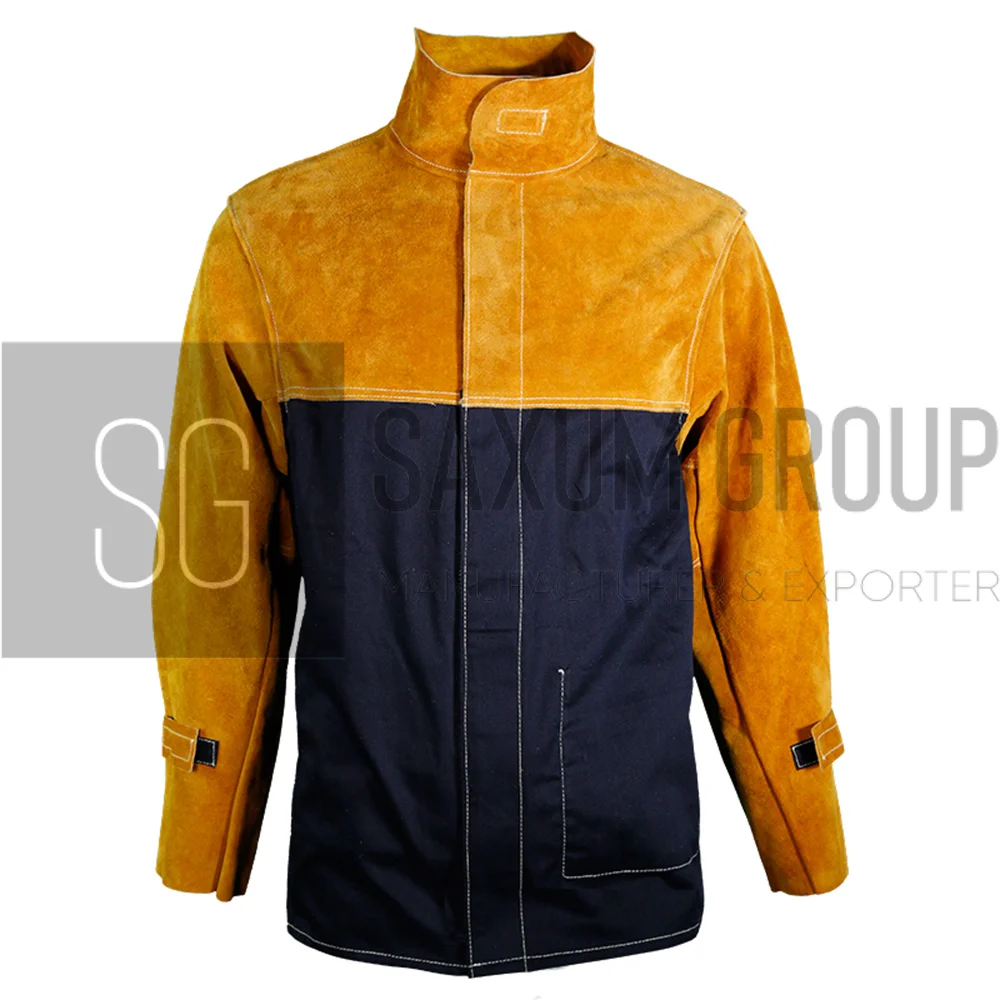
Leather vs FR cotton welding jackets compared
| Leather jacket | FR cotton jacket | Hybrid (leather + FR cotton) | |
|---|---|---|---|
| Spatter protection | Highest | Light to moderate | High at front and sleeves |
| Weight | Heavy | Light | Medium |
| Comfort in heat | Hot | Cool, breathable | Cooler than full leather |
| Durability | Very long with care | Shorter, wears with washing | Good |
| Care | Wipe clean, no machine wash | Washable, follow the label | Spot clean the leather parts |
| Best for | Stick, high-current MIG, overhead work | TIG, light MIG, hot environments | Mixed work, long shifts |
What EN ISO 11611 says
EN ISO 11611 is the European standard for protective clothing used in welding. It splits garments into two classes. Class 1 is meant for lighter spatter work, the kind of welding where fewer and smaller drops fly around, such as TIG and low-current MIG. Class 2 is for heavier spatter, think stick welding and high-current MIG or MAG, and the fabric has to withstand more drops of molten metal in testing (25 drops versus 15 for Class 1).
In practice, many FR cotton jackets are rated Class 1, and leather is what you usually see at Class 2. Some jackets carry two ratings, with a leather front at Class 2 and a cotton back at Class 1. If you need a certified garment, ask for the test report for that exact jacket model. A label alone doesn’t tell you much.
When a leather welding jacket makes sense
Go leather when the spatter is heavy or comes from above. Stick welding with bigger rods. High-amp MIG. Gouging. Overhead or out-of-position welds where sparks drop straight onto the shoulders. In those jobs, an FR cotton jacket can get small burn holes fast, and nobody wants a hot bead finding its way through to the skin.
Leather also lasts. A well-made split leather jacket can stay in service for a long time, which helps the cost per year even if it’s pricier on day one. Just don’t put it in a washing machine. Brush off spatter, wipe it down, let it dry naturally.
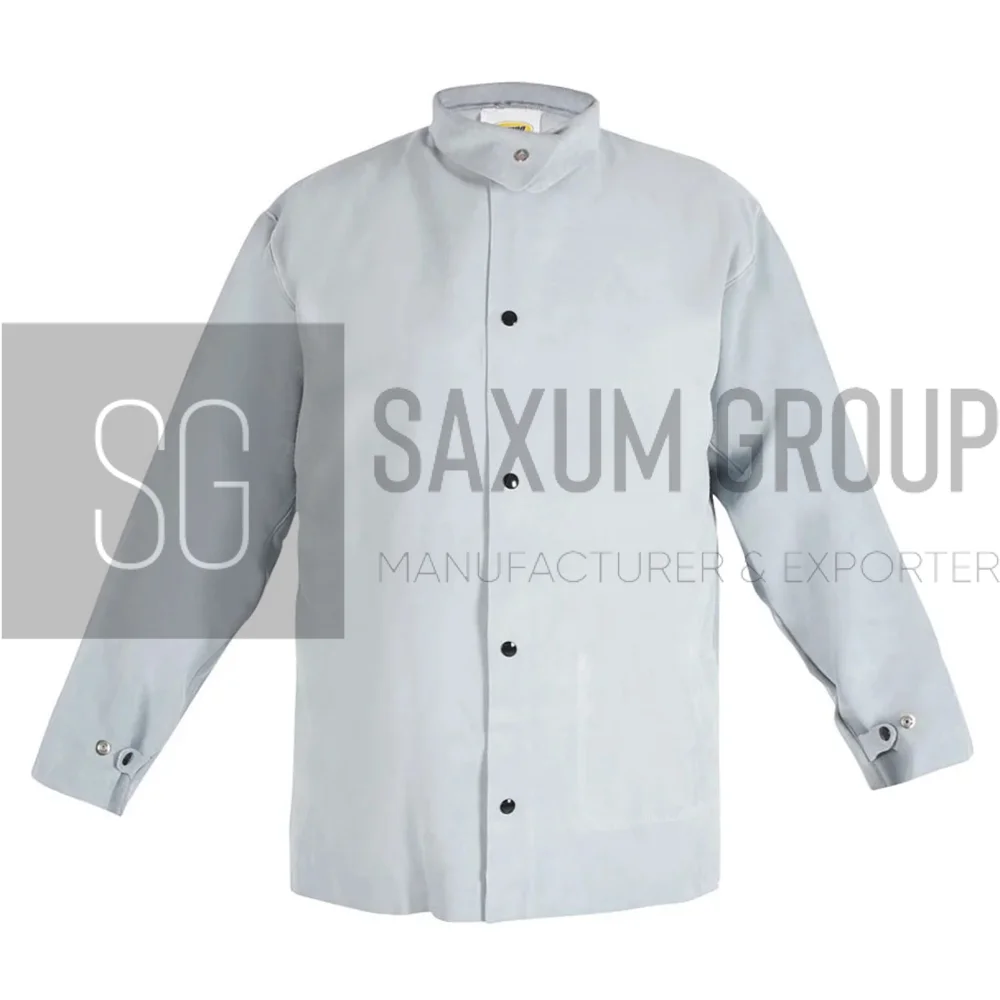
When an FR cotton jacket is the better choice
Heat changes everything. In a hot workshop, or anywhere in a warm climate, a full leather jacket gets uncomfortable quickly, and uncomfortable welders take jackets off. That’s the real risk. A lighter FR cotton jacket that people actually keep on is often safer in practice than a leather one hanging on a hook.
TIG welders like FR cotton for the same reason. TIG doesn’t throw much spatter, so the extra weight of leather mostly just slows the arms down. One thing to check with FR cotton, though: how the flame retardancy holds up after washing. Treated cotton can lose some of its effect over many washes, so ask the supplier how many washes it’s rated for, and follow the care label.
Why many buyers go hybrid
If your welders do a bit of everything, a hybrid jacket is usually the easiest answer. Leather on the front and sleeves takes the spatter, cotton on the back lets heat out. It weighs less than full leather and gives more protection than full cotton where it counts.
And it doesn’t have to be the jacket on its own. Plenty of crews wear an FR cotton jacket and add leather welding sleeves or an apron for the dirtier jobs. You’ll find jackets, aprons and sleeves on our welding clothing page. Don’t forget the hands, either. The glove cuff should overlap the jacket sleeve, and our welding glove length guide explains how to get that right.
Custom and private label welding jackets
We make welding jackets in soft split leather, chrome leather and the leather and FR cotton hybrid, with options like button closures, inside pockets and your own branding. Our leather comes from Leather Working Group gold members and our woven fabric from OEKO-TEX certified mills. With our private label manufacturing service you get a sample first, then bulk production once you’ve approved it. Need welding gloves to go with them? Take a look at our leather welding and work gloves, or our TIG vs MIG vs Stick glove guide.
Frequently asked questions
Is a leather welding jacket better than FR cotton?
For heavy spatter, yes. For comfort in heat and for light spatter work like TIG, FR cotton is often the better choice. It depends on the job.
Can you wash a leather welding jacket?
Not in a machine. Brush off spatter, wipe it with a damp cloth and let it air dry away from direct heat.
Does an FR cotton jacket stop molten metal?
It resists sparks and small spatter, but heavy spatter can burn through over time. That’s why stick welders and overhead welders usually go for leather, or add leather sleeves and an apron.
What is the difference between Class 1 and Class 2 in EN ISO 11611?
Class 1 is for lighter spatter welding such as TIG. Class 2 is for heavier spatter like stick welding, and the material has to withstand more molten metal drops in testing.
The bottom line
Leather for heavy spatter, stick welding and overhead work. FR cotton for TIG, light MIG and hot shops. A hybrid when your crew does a bit of everything. Then check the test report for the exact garment, and make sure gloves, sleeves and jacket overlap properly.
Building a welding clothing range? Send us your spec with the styles, sizes and quantities, and you’ll get a quote within 24 hours. You can also read more about Saxum Group and our work in Sialkot.